SP7-IUC - With the aim of raising environmental awareness and cultivating sustainable waste management habits within schools, Quy Nhon University partnered with Ngo May Lower Secondary School and Quang Trung Lower Secondary School to organize the "Share Your Green" programme. Built around the message "Small Actions, Big Change," the initiative went beyond simply delivering practical environmental knowledge — it also sought to awaken a sense of responsibility and inspire proactive, green-minded action among the student generation. The programme was held as part of Project 7: Building a Sustainable Waste Management System at Quy Nhon University, under the framework of the Institutional University Cooperation (IUC) Programme between Quy Nhon University and its Belgian university partners.
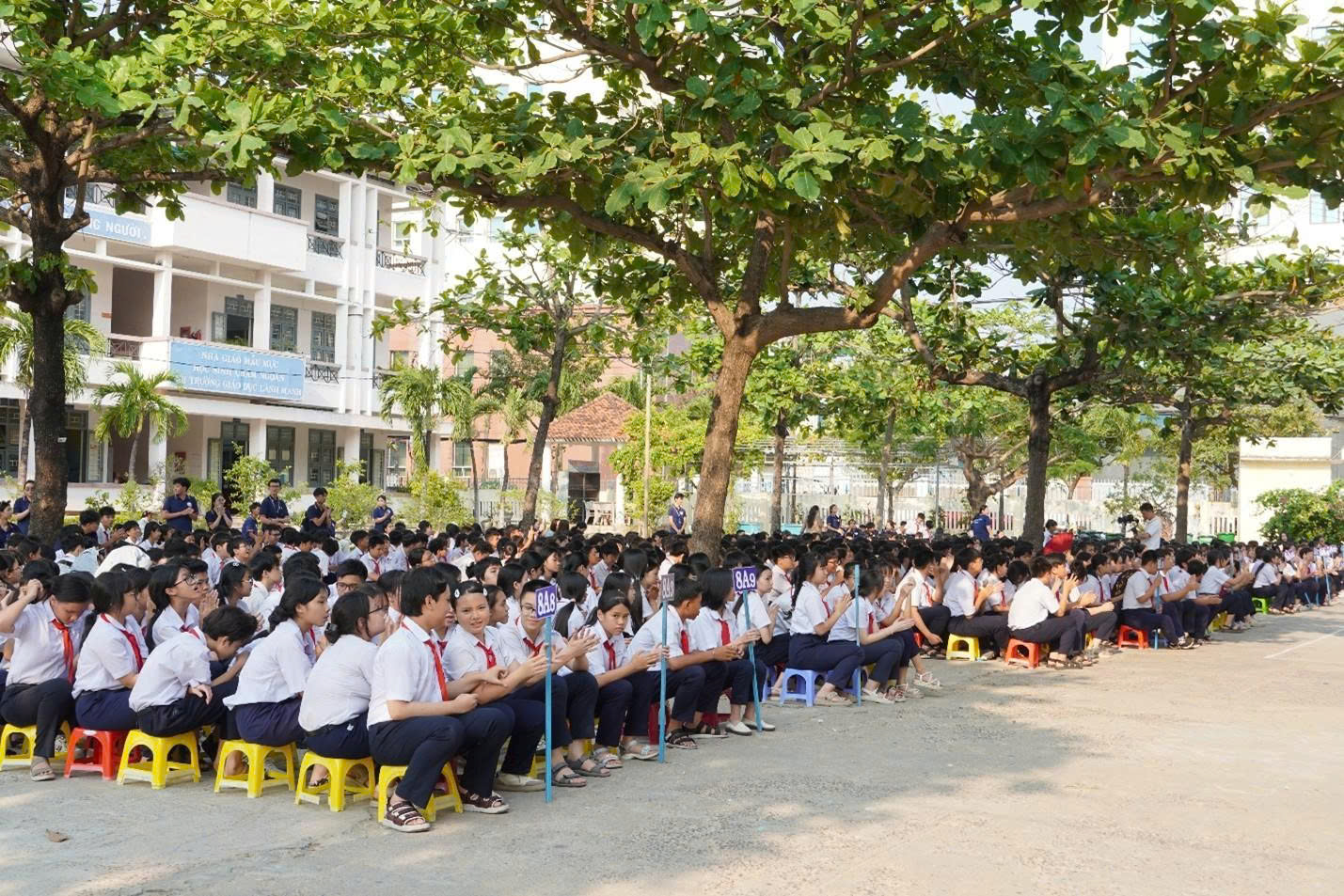
An overview of the "Share Your Green" event at Ngo May Lower Secondary School.
Designed to raise awareness — particularly among students — of the importance of sorting household solid waste at source, the programme served as a practical and meaningful intervention to promote environmental protection and cultivate sustainable lifestyles. By spreading the message of green living, "Share Your Green" worked to build positive habits early, helping students adapt to a modern way of life that is in harmony with nature. The enthusiastic participation of students and teachers alike generated a strong ripple effect, affirming the programme's real and lasting impact within the school community.
.jpg)
Master's holder Le Thi Thuy Trang presented an overview of household solid waste classification.
Lecturers delivered concise and visually engaging presentations on household solid waste and proper sorting practices in everyday life, helping students recognize the environmental significance of even the smallest actions. Building on this foundation, a dynamic series of experiential activities was rolled out, blending individual and group participation in flexible and creative ways. Through interactive games such as "Who's Quickest, Who's Right?" and "Where Does It Belong?", students sharpened their reflexes while reinforcing their environmental knowledge naturally and enjoyably, and gained a clearer understanding of how to sort waste according to its source. Going beyond passive learning, students were also actively involved in discussions, idea development, product design, and the proposal of practical solutions for reducing waste in their daily lives.
Of particular note, the hands-on waste sorting activity gave students the opportunity to physically sort waste into the correct bins themselves — reinforcing their understanding and gradually embedding the habit into their everyday behaviour. The seamless integration of knowledge and hands-on experience created a vibrant and engaging learning environment, nurturing creative thinking, a spirit of teamwork, and a genuine sense of environmental responsibility in every participant.
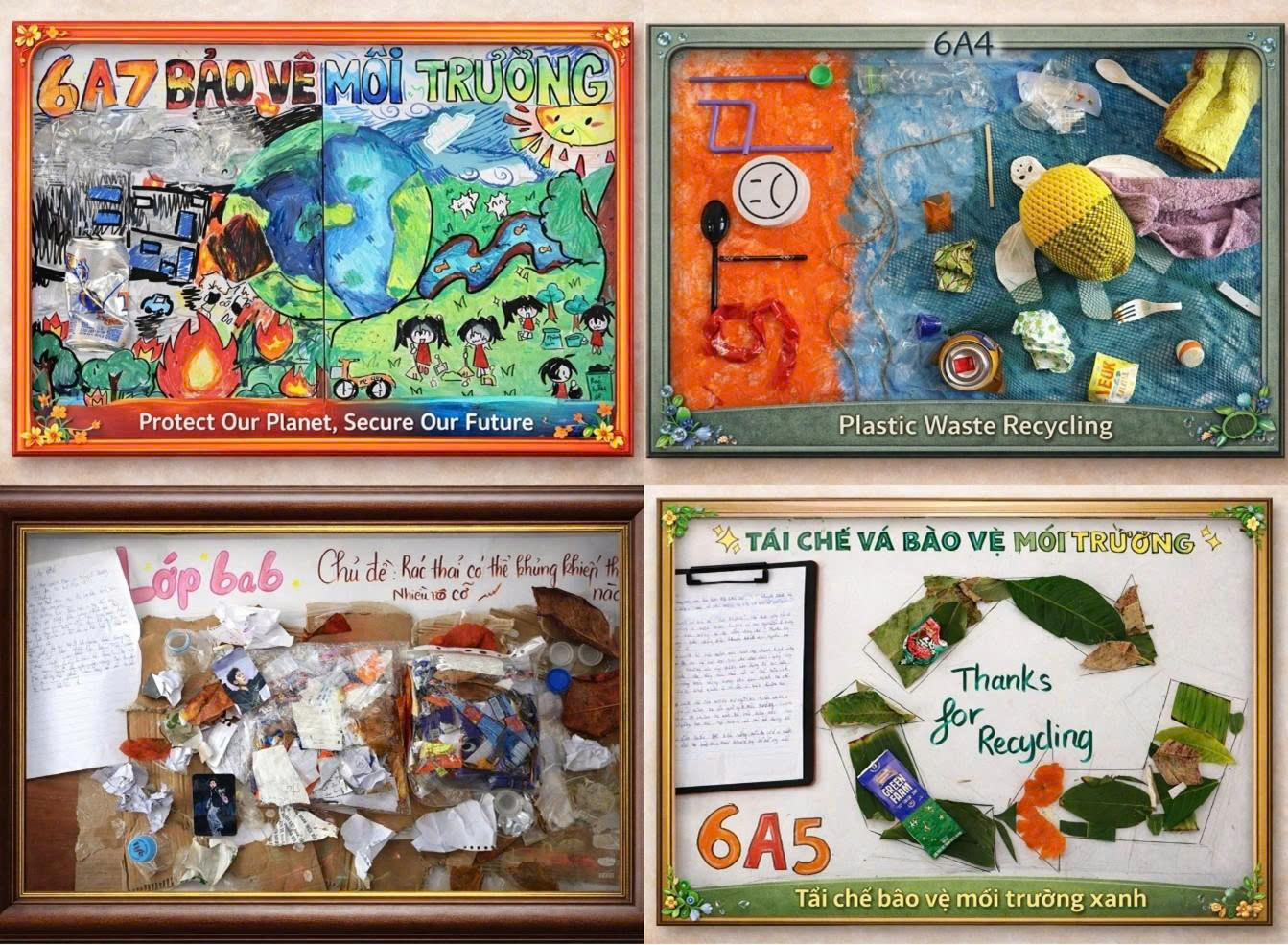
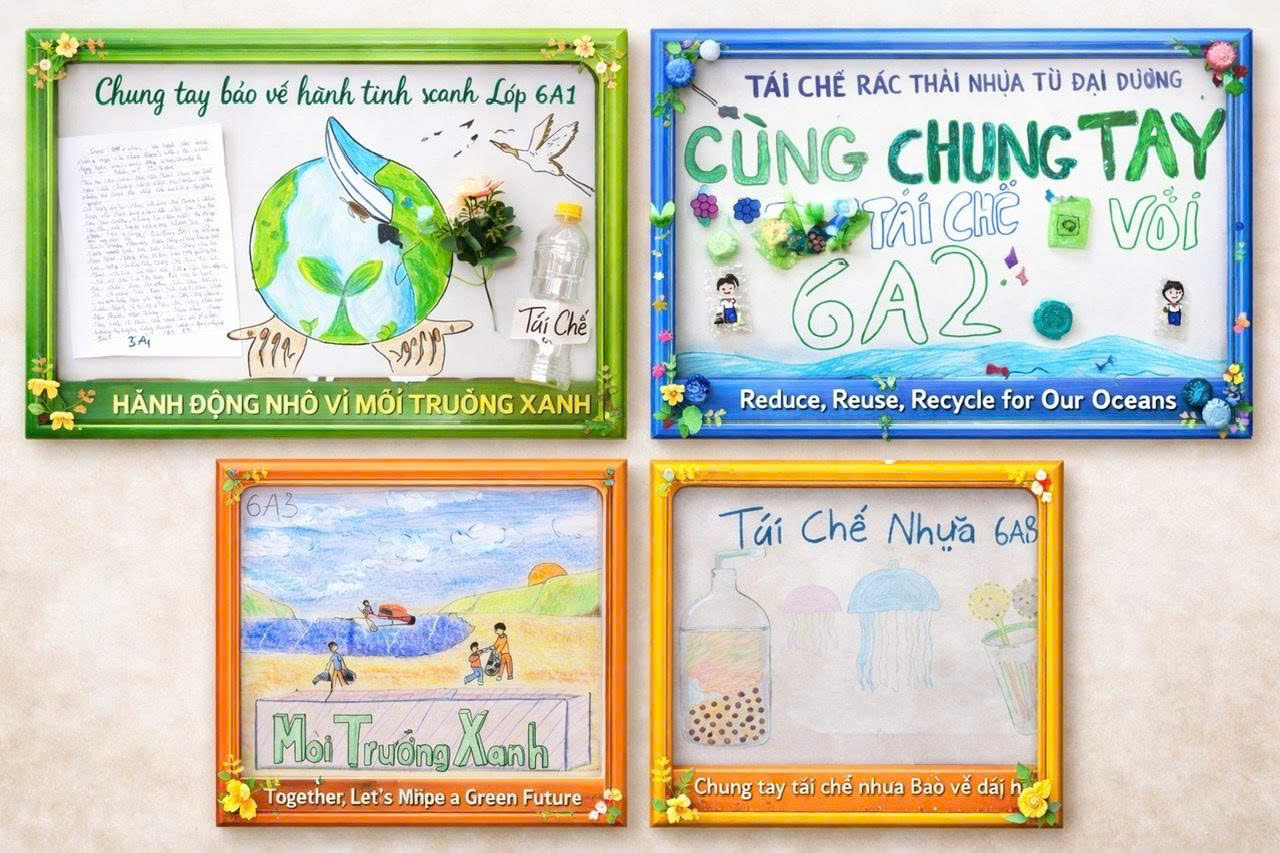
Creative products made from recycled materials by students, spreading the message of environmental protection and green living.
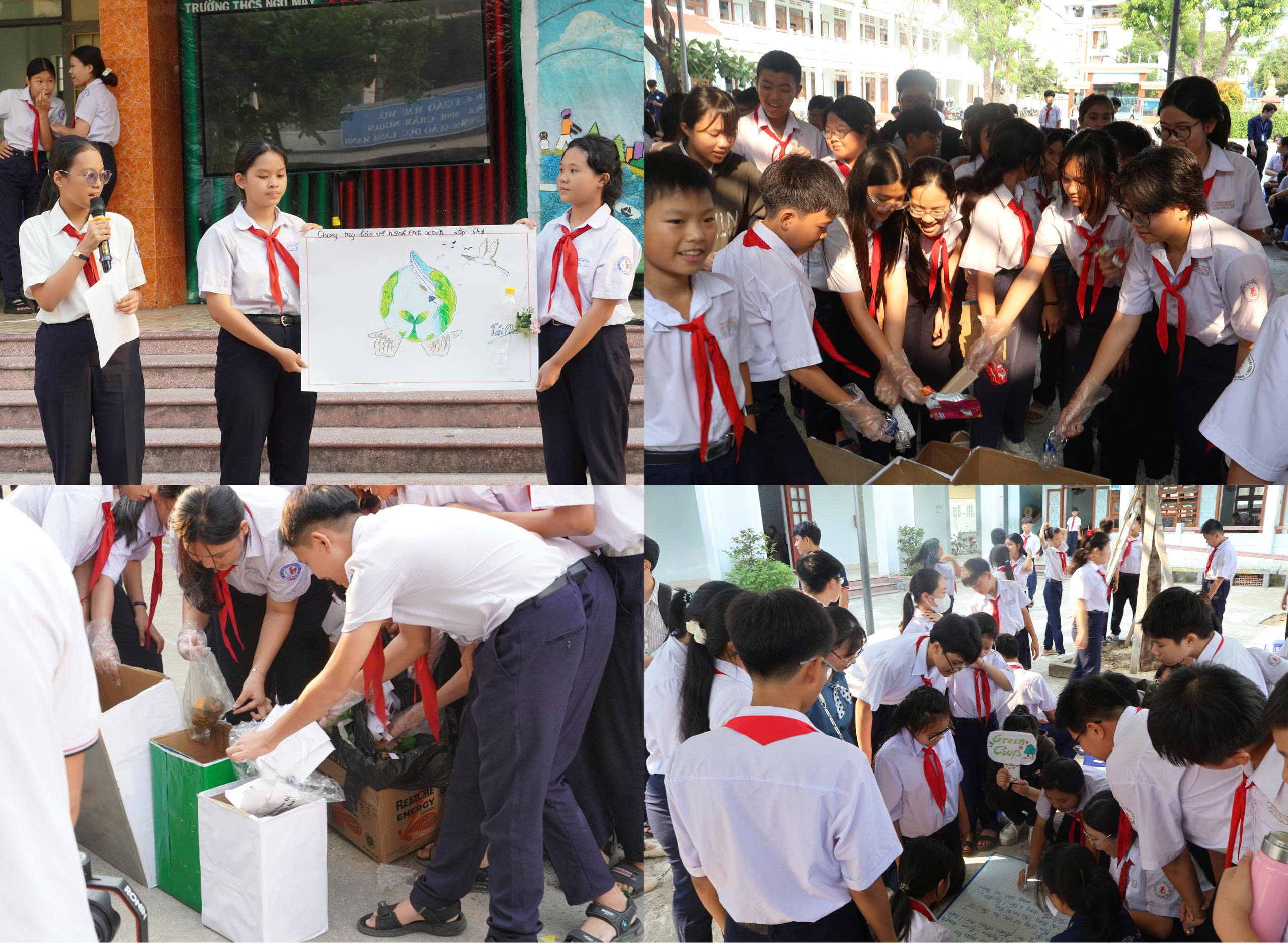
Students
enthusiastically engaged in the programme's activities.
Speaking at the event, Dr. Dang Nguyen Thoai, Deputy Head of the Faculty of Natural Sciences at Quy Nhon University and Project 7 Coordinator, underscored the pivotal role of education in shaping environmental consciousness among the younger generation. In his view, the simple acts of daily life — most notably sorting waste at source — are the very foundation upon which lasting and meaningful change is built. Expressing his delight at the enthusiastic engagement of the students, Dr. Dang Nguyen Thoai also extended his sincere gratitude to the teachers, university students, and partner organizations who had worked together to bring the programme to life, and expressed his hope that the message of green living would continue to spread ever more widely throughout the broader community.
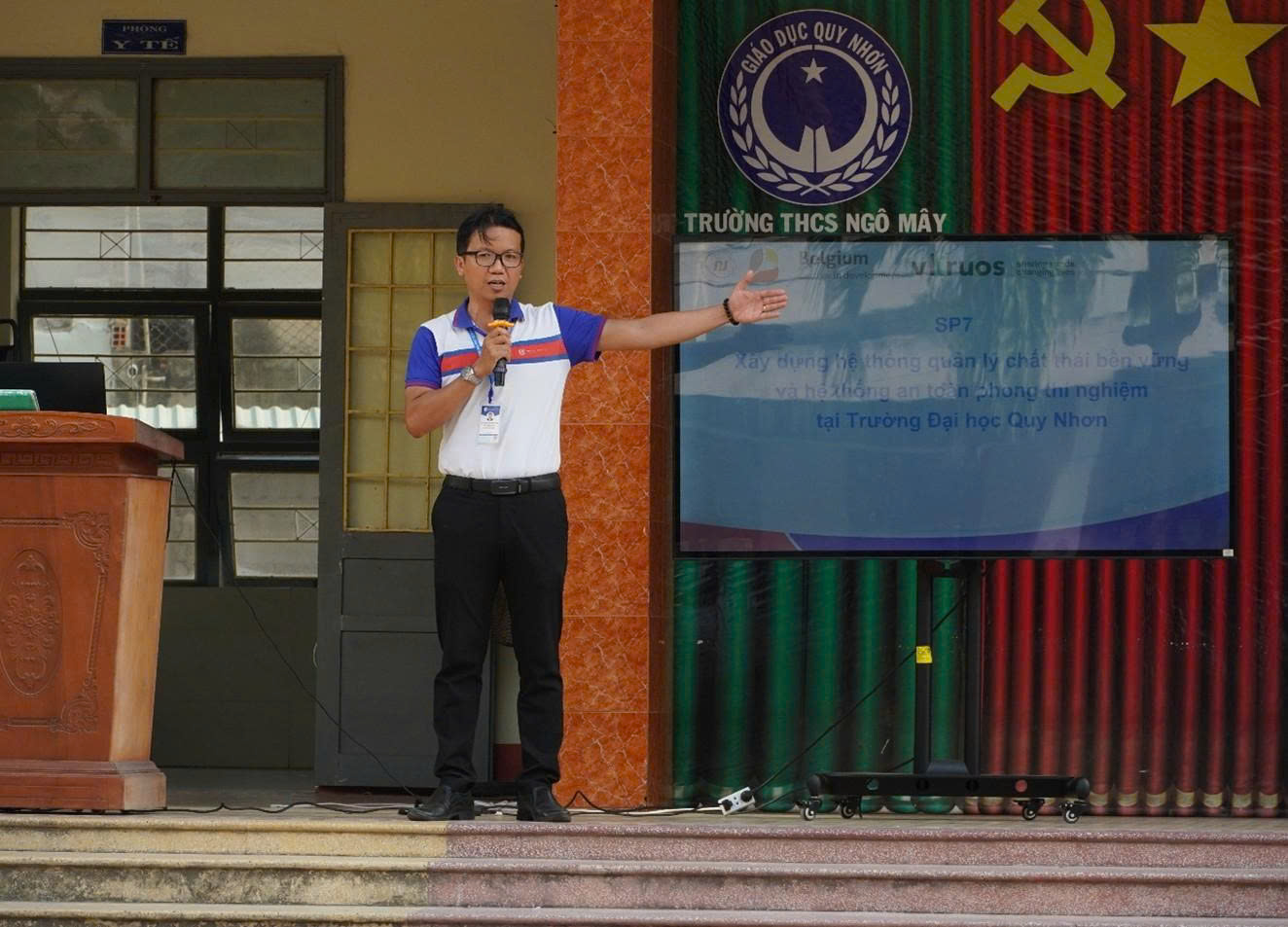
Dr. Dang Nguyen Thoai, Project 7 Coordinator, delivered remarks at the event.
As the programme drew to a close, "Share Your Green" left a clear and lasting impression on the minds and actions of its young participants. From foundational knowledge to hands-on practice, the initiative contributed to the formation of green, environmentally responsible habits from the earliest years of a student's life. The "green seeds" sown today are expected to keep growing and spreading — generating positive, sustainable change throughout the community, in true keeping with the spirit of "Small Actions, Big Change."
Nguyen Thi Quy
Vo Thien An