On the morning of July 16, 2026, the 8th Vietnam International Conference and Exhibition on Control and Automation (VCCA 2026) officially opened at Quy Nhon University, launching a three-day programme of science, technology, and industry networking activities from July 16 to 18, 2026.
Hosting VCCA 2026 further affirms Quy Nhon University’s capacity to organize international scientific events, while creating a platform that connects public-sector agencies, scientists, and businesses to advance research, technology transfer, innovation, and high-quality workforce development in the context of digital transformation.
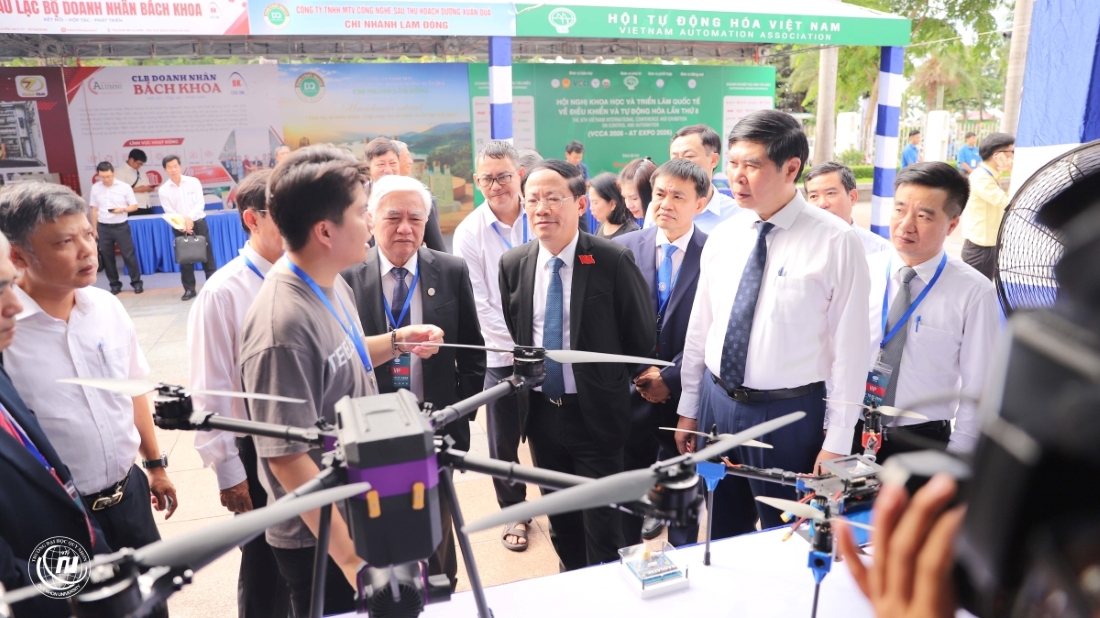
Delegates visited the Automation Technology Exhibition (AT Expo).
VCCA 2026 is led by the Vietnam Automation Association and jointly organized with Quy Nhon University, the Gia Lai Department of Science and Technology, and relevant partners. It is supported by the Ministry of Science and Technology, the Ministry of Industry and Trade, the Ministry of Education and Training, the Gia Lai Provincial People’s Committee, the Vietnam Union of Science and Technology Associations (VUSTA), and the Vietnam Chamber of Commerce and Industry (VCCI). Under the theme “Intelligent Automation: A Strategic Technology for the Digital Era,” VCCA 2026 is not only a specialist scientific forum, but also a space linking government, researchers, and businesses to promote research, technology transfer, and the development of an innovation ecosystem.
An International Scientific Forum Advancing Strategic Technologies
Held as Vietnam steps up implementation of Politburo Resolution No. 57-NQ/TW on the development of science, technology, innovation, and national digital transformation, VCCA 2026 focuses on strategic technology fields including robotics, artificial intelligence, and intelligent automation.
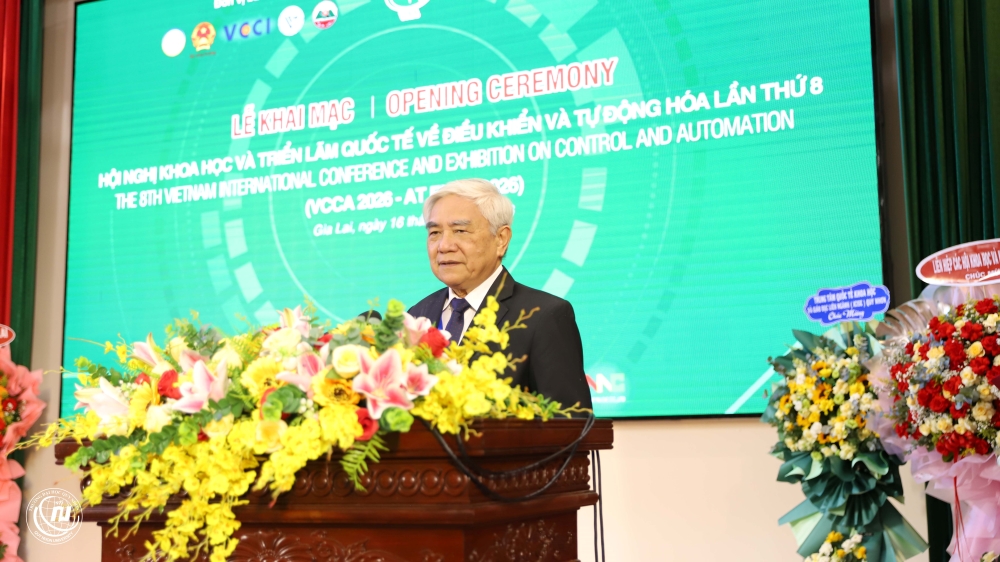
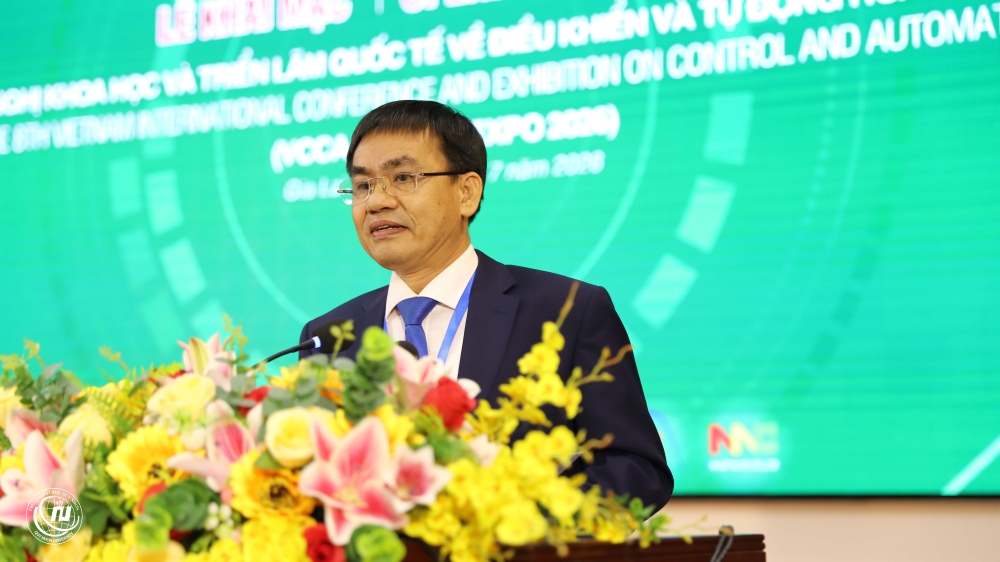
Dr. Nguyen Quan, President of the Vietnam Automation Association, delivered the opening remarks at VCCA 2026.
In his opening remarks, Dr. Nguyen Quan, President of the Vietnam Automation Association, noted that Gia Lai Province—celebrated as a land of martial tradition and scholarship, and the homeland of the Tay Son hero Emperor Quang Trung, Nguyen Hue—has become a gathering place for leading Vietnamese and international scientists. Distinguished scholars, including Nobel Prize recipients, have come to the International Centre for Interdisciplinary Science and Education founded by Professor Tran Thanh Van. Following reforms in administrative governance, “the highlands have truly been brought closer to the sea,” he said. This represents Gia Lai’s future, opening up new and promising opportunities for the comprehensive and sustainable development of science and technology.
According to Dr. Nguyen Quan, automation technology is facing tremendous opportunities as Vietnam enters the digital era and a new era of national advancement. Vietnam aims to become a developing country with upper-middle income by 2030 and a developed, high-income country by 2045. The Party and the State have consistently identified science and technology as a key pillar for achieving these goals. The Politburo issued Resolution No. 57 on breakthroughs in science and technology, innovation, and national digital transformation. In 2025, the National Assembly adopted the 2025 Law on Science, Technology and Innovation, featuring many new provisions; since then, the Government and ministries have issued numerous guiding documents for its implementation.
Dr. Nguyen Quan also expressed his hope that VCCA 2026 would help Gia Lai’s leaders identify new opportunities for growth, while enabling local businesses to engage directly with scientists, enterprises, and technology-solution providers in support of the province’s development needs. The locality’s dynamic growth and transformation within its new development space, he noted, would offer delegates a vivid sense of the practical value of scientific work in measurement and automatic control.
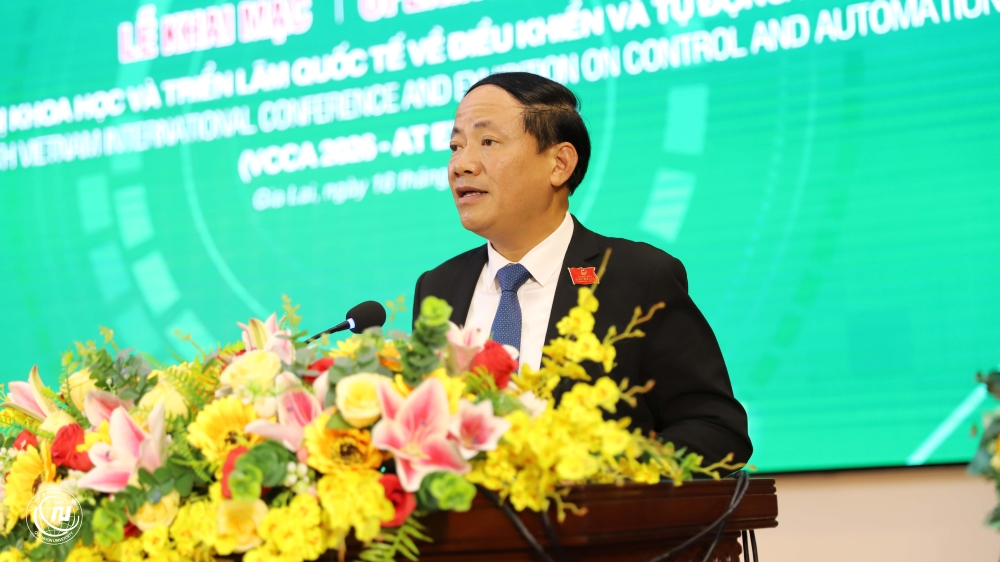
Mr. Pham Anh Tuan, Chairman of the Gia Lai Provincial People’s Committee, expressed appreciation to the Vietnam Automation Association for selecting Gia Lai as the venue for VCCA 2026.
Mr. Pham Anh Tuan, Chairman of the Gia Lai Provincial People’s Committee, acknowledged and sincerely thanked the Vietnam Automation Association for selecting Gia Lai as the venue for VCCA 2026. For the province, hosting the conference is of special significance. It is not only an honour to welcome the domestic and international scientific community, but also an opportunity to strengthen connections, learn from experience, expand cooperation, and gain access to new scientific and technological achievements that support local development.
Entering a new stage of development, Gia Lai identifies science, technology, innovation, and digital transformation as the foundations of its growth model and drivers of greater productivity, competitiveness, and sustainability. Drawing on the advantages of its new development space, the province is working toward a green, modern, smart economy built on knowledge and technology. Gia Lai also aims to develop its science, technology, and innovation ecosystem and strengthen links among government, educational institutions, scientists, and businesses to accelerate the transfer and practical application of research outcomes.
“The province seeks to become a point of connection among scientists, businesses, and government. We also aim to strengthen cooperation with the Vietnam Automation Association, research institutes, universities, and domestic and international partners to jointly undertake research, transfer technology, and establish practical cooperation programmes—thereby creating new momentum for sustainable local development,” the Chairman of the Gia Lai Provincial People’s Committee shared.
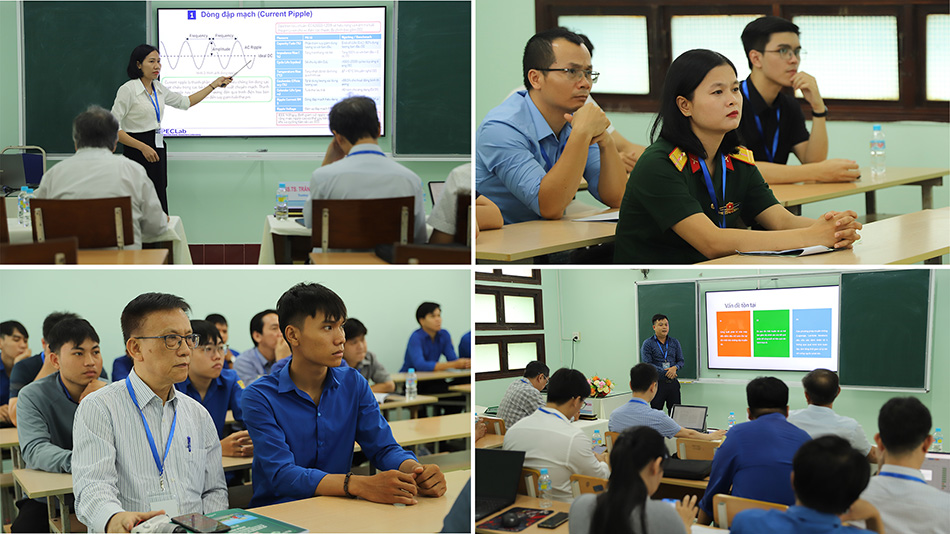
The conference selected 157 of 178 scientific papers for presentation across 22 specialized sessions.
This year’s conference selected 157 of 178 scientific papers for presentation across 22 specialized sessions. Compared with VCCA 2024, both submissions and accepted papers increased, reflecting the forum’s growing appeal to the research community in control and automation. Presentations addressed a broad range of contemporary topics, including industrial and mobile robots, autonomous vehicles, artificial intelligence (AI), the Internet of Things (IoT), big data, biomedical electronics, agricultural automation, smart factories, and smart cities. At the plenary session, Vietnamese and international experts introduced new research results on intelligent robots, adaptive control systems, unmanned aerial vehicles, smart manufacturing technologies, and automation solutions for production and daily life.
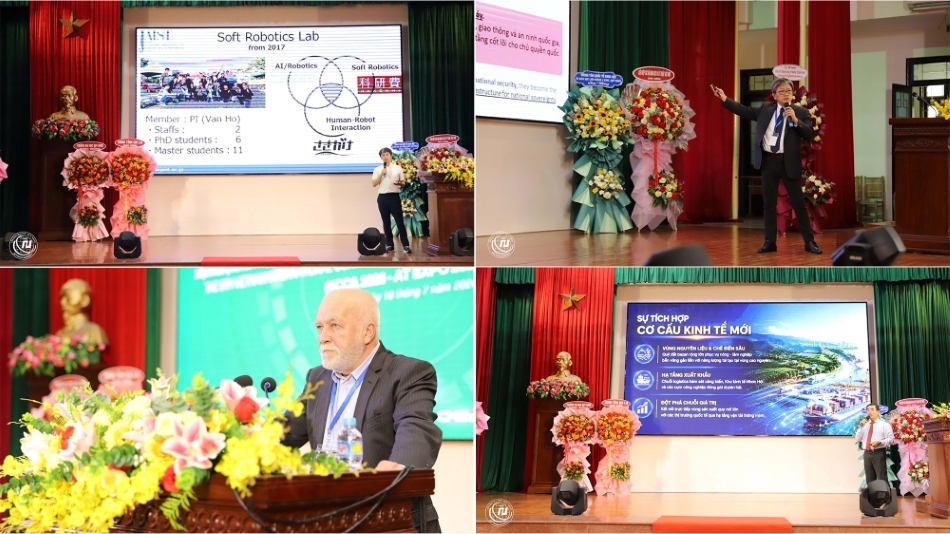
Vietnamese and international experts presented new research findings at the plenary session.
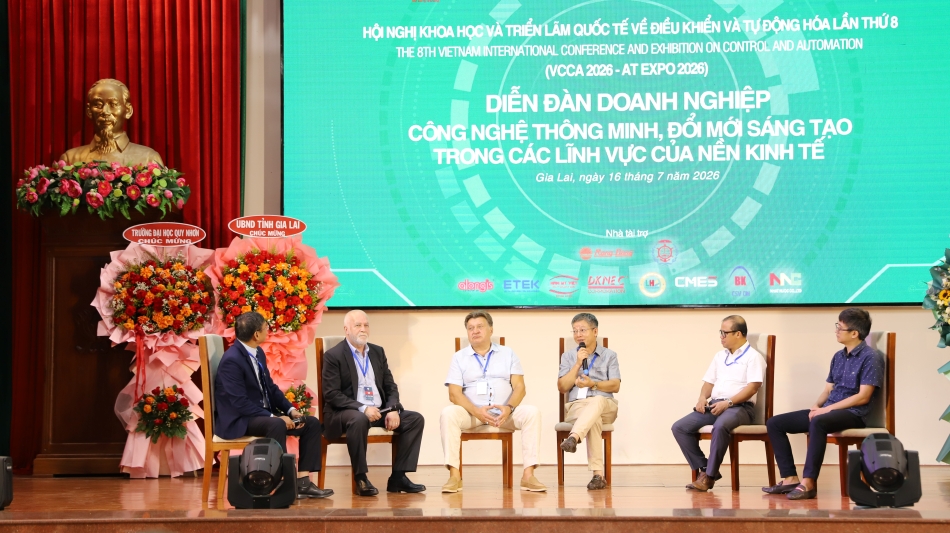
The Business Forum discussed innovation, green transition, “Make in Vietnam” robotics and drone ecosystems, renewable energy, human resource development, and applied research collaboration.
Alongside the scientific conference, the Business Forum featured approximately 25–30 presentations by experts, managers, and business representatives on innovation, green transition, “Make in Vietnam” robotics and drone ecosystems, renewable energy, human resource development, and applied research collaboration. The forum fostered connections among public agencies, research institutions, universities, and businesses to share practical needs, introduce research outcomes, and expand opportunities for cooperation and technology transfer.
Connecting Technology with Business and Local Value
A highlight of VCCA 2026 was the Automation Technology Exhibition (AT Expo), which showcased new products and technological solutions from businesses, research institutes, and education providers in control and automation. Exhibition booths offered experiences involving robots, intelligent sensors, control systems, smart manufacturing solutions, and digital applications for production and business. In particular, holding AT Expo alongside the regional OCOP Products Fair created a link between modern technology and distinctive local products. This enabled businesses, cooperatives, and OCOP producers to access digital solutions for management, traceability, productivity improvement, and market expansion at home and abroad.
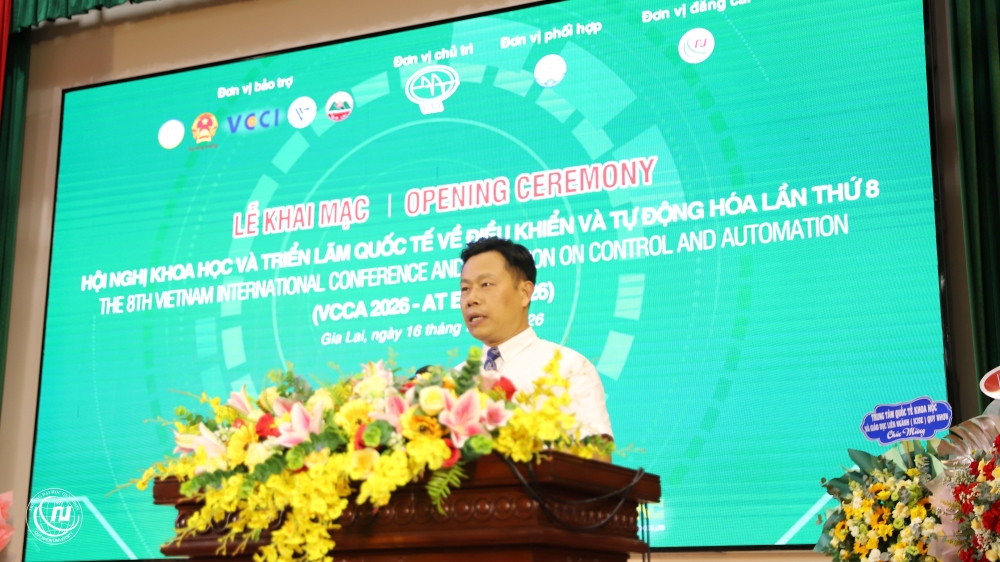
Deputy Minister of Education and Training Le Quan emphasized the significance of VCCA 2026.
Deputy Minister of Education and Training Le Quan emphasized that VCCA 2026 is significant in bringing together scientists, experts, and businesses to discuss technology trends, research, education, and real-world applications. The event also contributes to the effective implementation of central policies on science, technology, innovation, and education and training, particularly Resolution No. 57 and Resolution No. 71.
The Deputy Minister stated that the Ministry of Education and Training is implementing coordinated policies to advance the tripartite partnership model of government, universities, and business. Under this approach, enterprises not only commission research and help develop curricula and job-aligned learning outcomes, but also work alongside educational institutions in delivering training, recruiting graduates, and investing in research and training centres. This is an important solution for improving educational quality in engineering and technology fields, especially control and automation, where there is a shortage of engineers and experts in design, operation, maintenance, and research.
According to Deputy Minister Le Quan, demand for human resources in engineering and technology is currently very high, particularly in Central Vietnam, where economic zones, technology parks, and industrial complexes are developing rapidly in Gia Lai, Quang Ngai, Da Nang, and neighbouring localities.
The Deputy Minister also noted that engineering and technology education needs to move beyond traditional models toward interdisciplinary and transdisciplinary approaches centred on research and the solution of real-world problems. Students from different fields should be able to join research teams with experts and lecturers, accumulating competencies, modules, and credits while undertaking research projects.
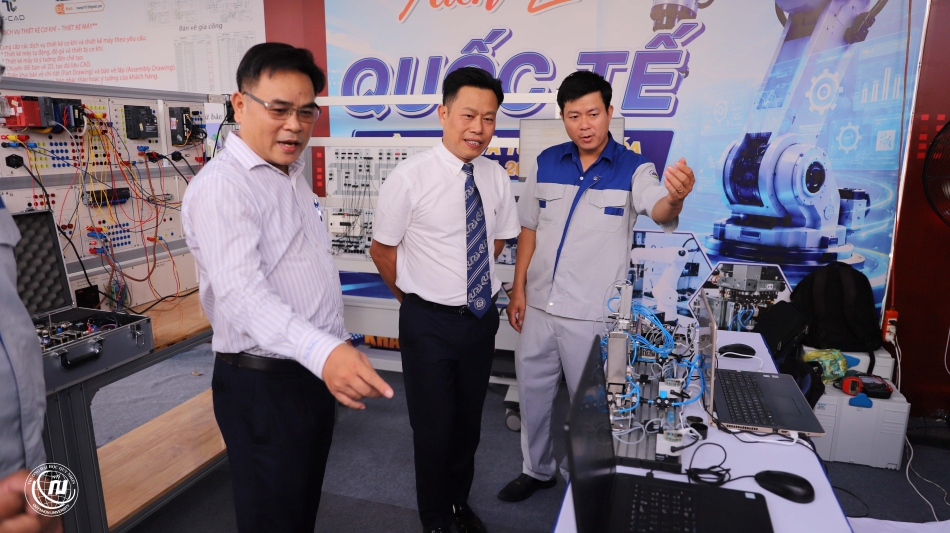
Deputy Minister Le Quan visited the equipment display of Quy Nhon Technical Technology College.
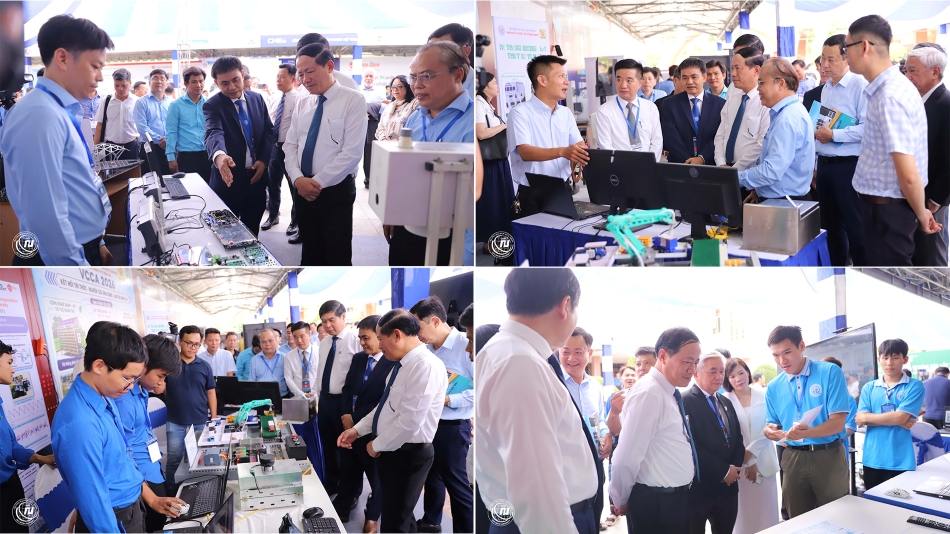
Delegates visited QNU’s engineering and technology model display area.
For Quy Nhon University, the Deputy Minister recommended stronger investment in engineering, technology, and health sciences, enabling the University to fulfil its role as a key regional higher education institution under the Ministry of Education and Training and meet workforce development needs in Central Vietnam and the Central Highlands.
In addition, he expressed his hope that Gia Lai’s leaders would continue to work with the Ministry of Education and Training and Quy Nhon University to invest in engineering, technology, and health sciences. He also called on the Vietnam Automation Association and professional organizations to partner with universities in developing new education and research models aligned with the development needs of businesses and localities.
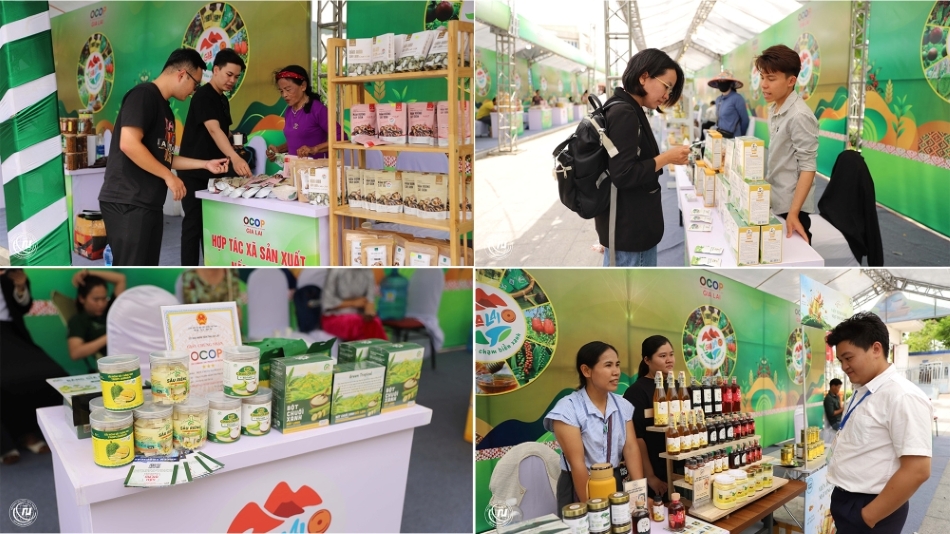
The Regional OCOP Products Fair space.
Affirming QNU’s Role and Standing in the Innovation Ecosystem
As a co-organizer and host institution, Quy Nhon University further demonstrated its capacity to organize large-scale international scientific events, helping to raise its profile among the scientific community, businesses, and domestic and international partners.
Assoc. Prof. Dr. Doan Duc Tung, Rector of Quy Nhon University, noted that QNU’s selection as host of VCCA 2026 recognized its efforts in education, scientific research, international cooperation, and community service.
Assoc. Prof. Dr. Doan Duc Tung, Rector of Quy Nhon University, said that VCCA 2026 is not only a prestigious academic forum but also an important bridge between research, education, and practice through its business forums, in-depth dialogues, and technology networking activities. The conference enables QNU lecturers, researchers, and students to access new advances in control, automation, and artificial intelligence, while engaging and learning from leading experts from Japan, the Russian Federation, Taiwan, and many other countries.
QNU’s selection as the host of VCCA 2026 recognizes its efforts in education, scientific research, international cooperation, and community service. It is also an opportunity for the University to further affirm its connecting role among public agencies, researchers, and businesses; promote knowledge transfer; align research with real-world needs; and contribute to building the region’s innovation ecosystem.
Assoc. Prof. Dr. Doan Duc Tung expressed his hope that VCCA 2026 would provide momentum for QNU’s scientific research, technology transfer, innovation, and high-quality workforce development, thereby helping to realize the Party’s and State’s policies on science, technology, innovation, and digital transformation in the new period.
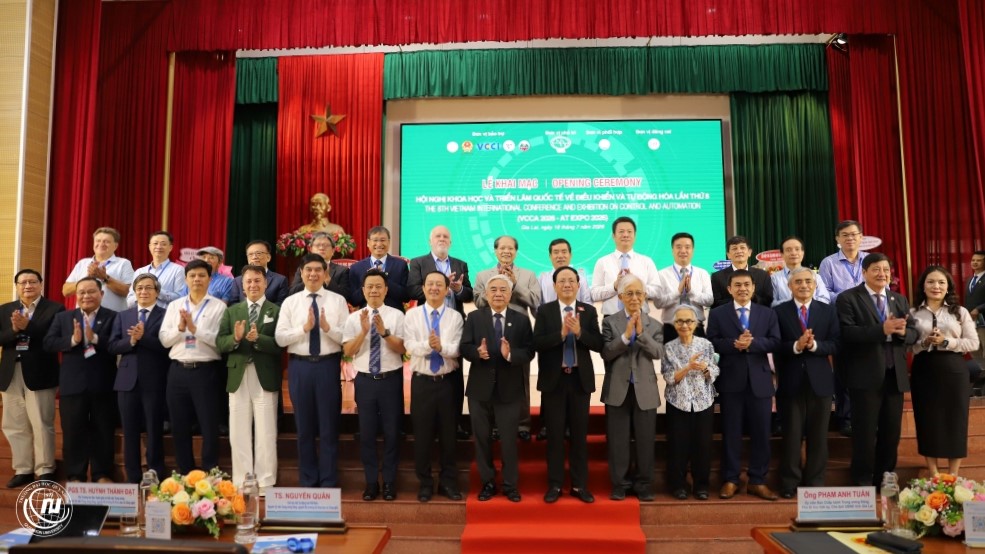
Delegates took a commemorative photograph.
The successful hosting of VCCA 2026 further affirms Quy Nhon University’s standing within the network of research-oriented higher education institutions, while demonstrating its increasingly prominent role in advancing innovation, digital transformation, and science and technology development. It moves QNU closer to its goal of becoming a reputable regional centre for education, research, and technology transfer in the South Central Coast and Central Highlands regions.
Minh Hien
Vo Thien An