As part of its strategy to enhance educational quality and deepen international integration, Quy Nhon University welcomed a working delegation from VIVES University of Applied Sciences (Belgium) under the framework of the ICP Connect Project. The programme ran from April 14 to April 21, 2026, and featured a rich array of activities including strategic cooperation discussions, business networking, consultations on developing a sustainable hospitality and tourism curriculum, a series of international guest lectures for students, and the promotion of learning and research opportunities within a globally connected environment.
Strengthening Academic Exchange and Expanding Long-Term Cooperation
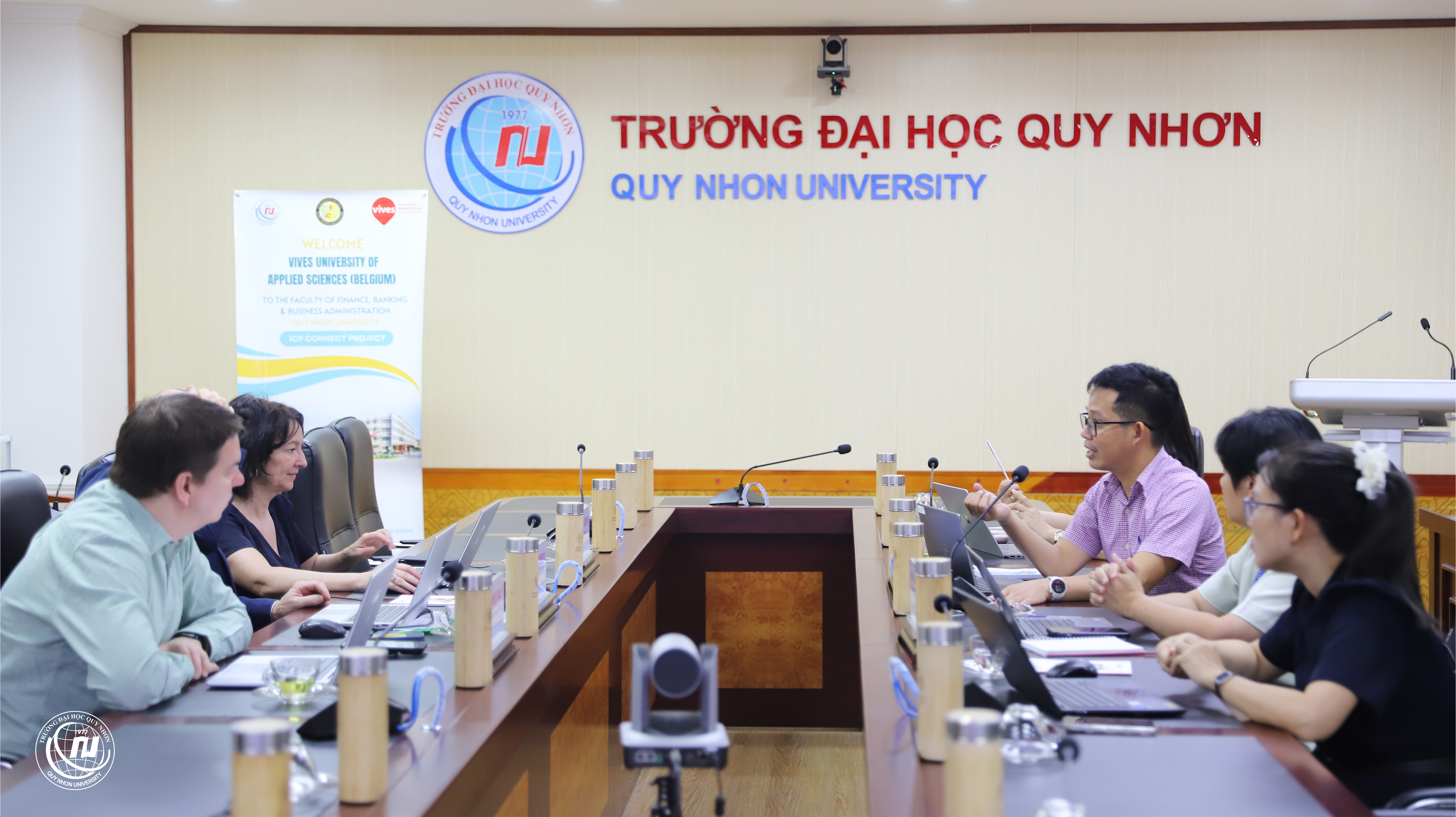
A review session assessed the progress of the ICP Connect Project and discussed the activity plan for 2026.
The working week opened with a review session assessing the progress of the ICP Connect Project, followed by discussions on the activity plan for 2026. Building on the achievements already made, both parties agreed to continue advancing a number of priority areas of cooperation going forward. Of particular note, the strategic dialogue sessions between Quy Nhon University and VIVES focused on curriculum development, the strengthening of scientific research, the expansion of professional practice activities, and investment in training equipment and facilities. These are the pivotal areas through which both institutions aim to elevate the standard of education to meet international benchmarks and address the growing demand for a high-quality workforce in an increasingly globalized world.
Building Industry Connections and Developing a Sustainable Tourism Curriculum
One of the most prominent highlights of the working week was a consultation session involving management authorities, hospitality and tourism enterprises, and QNU's own faculty and students from the Hospitality and Tourism programme.
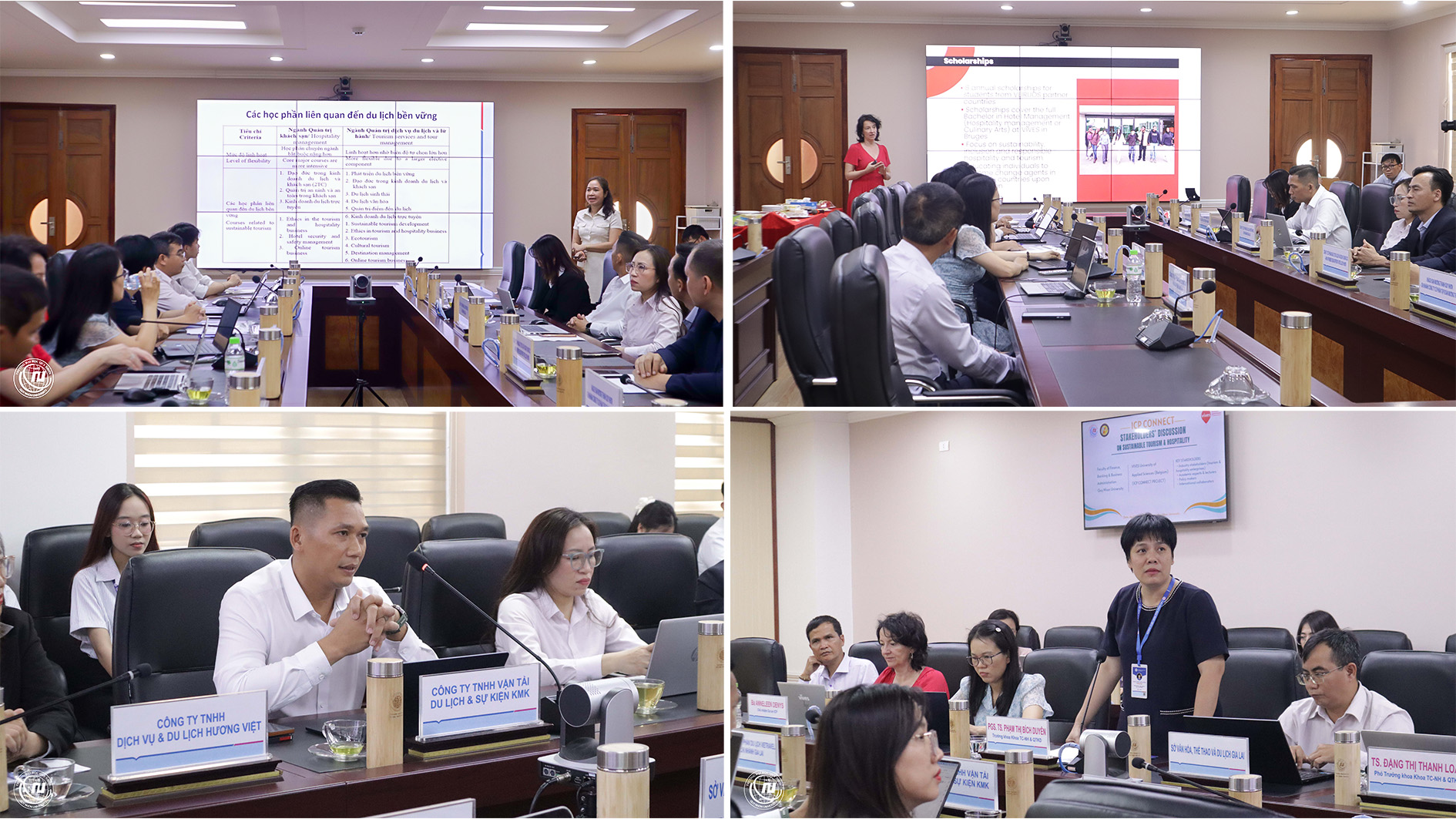
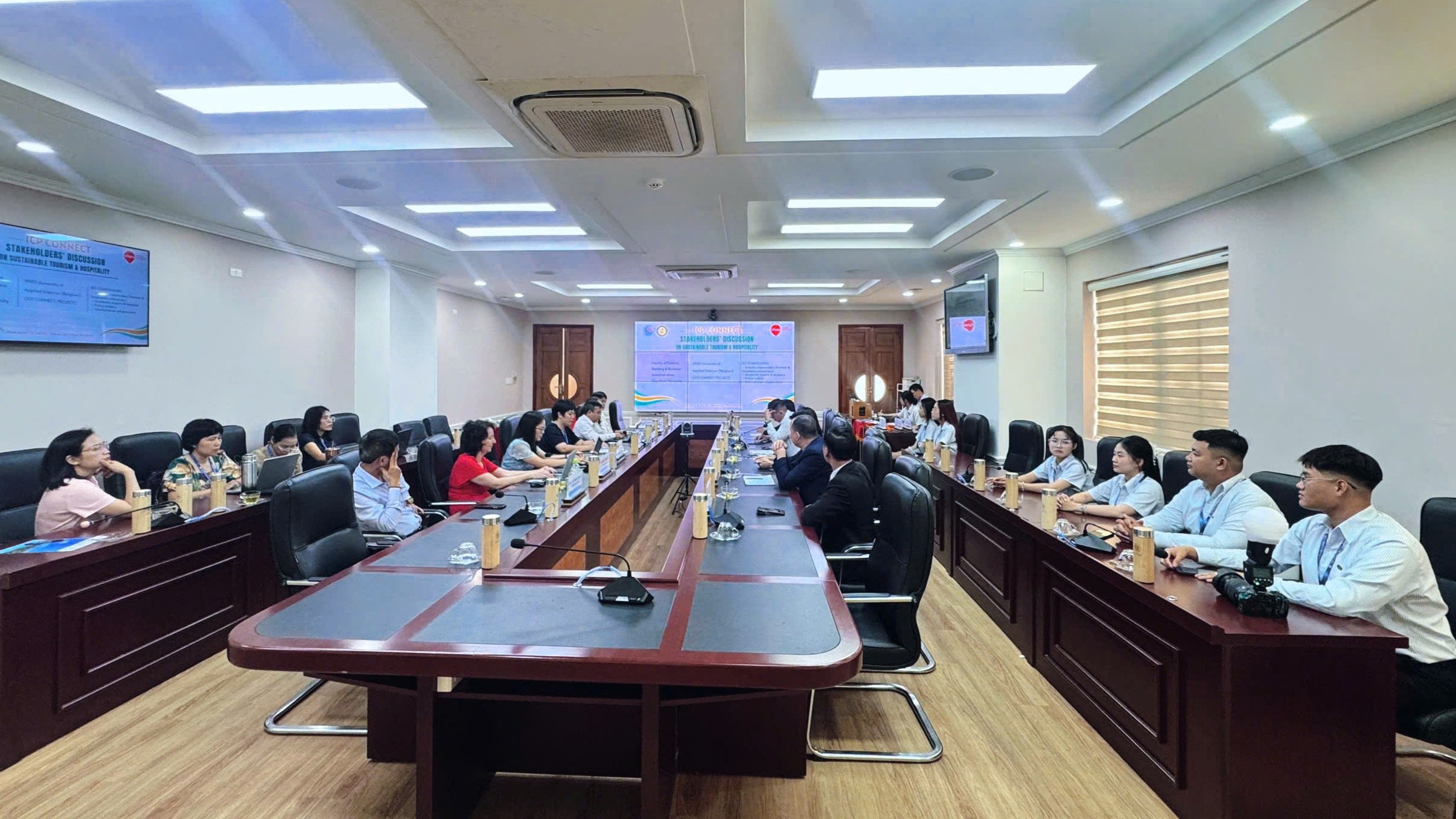
Industry representatives from the Hospitality and Tourism sector participated in curriculum consultations.
At the session, participants engaged in wide-ranging discussions on the direction of the ICP Connect Project's implementation in Vietnam, as well as consultations on modernizing the Hospitality and Tourism curriculum to better align with real-world labour market demands. A number of practical cooperative measures were also proposed, including inviting industry experts and business managers to participate in teaching, expanding the network of internship host organizations, increasing post-graduation employment opportunities, and updating the programme to reflect the evolving workforce needs of the tourism sector in its current phase of development.
Through this initiative, Quy Nhon University continues to reinforce its commitment to a model of education built on close collaboration between the university, the business community, and society at large — working toward a tourism curriculum that is both sustainable and deeply grounded in practical application.
QNU Students Gain from a Series of International Guest Lectures
As part of the programme, QNU students had the valuable opportunity to attend a series of specialized lectures delivered directly by international academics — including Ms. Anneleen Denys, ICP Project Coordinator, alongside Dr. Matthieu Calu and Dr. Lode Vanwildemeersch from VIVES University.
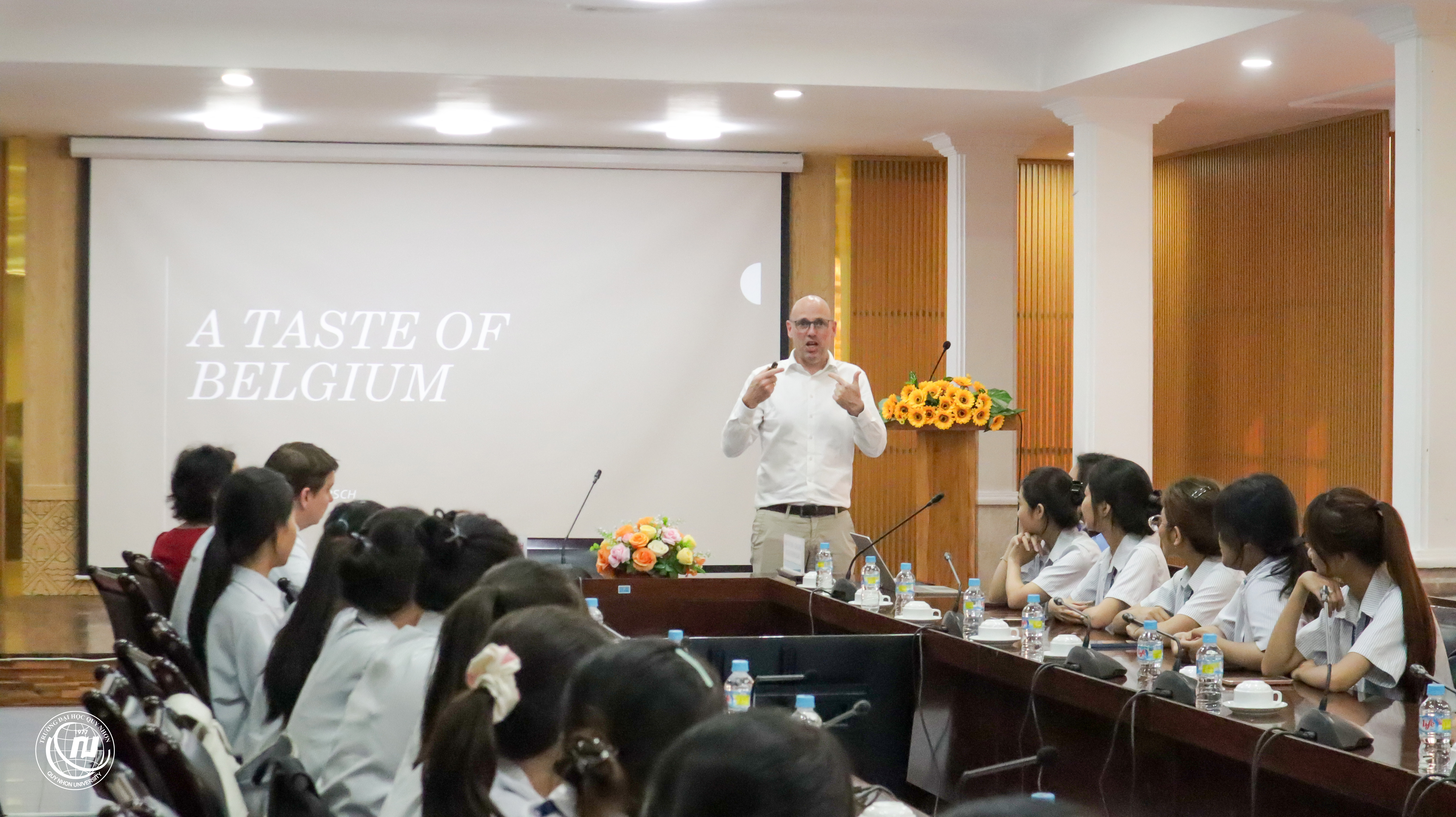
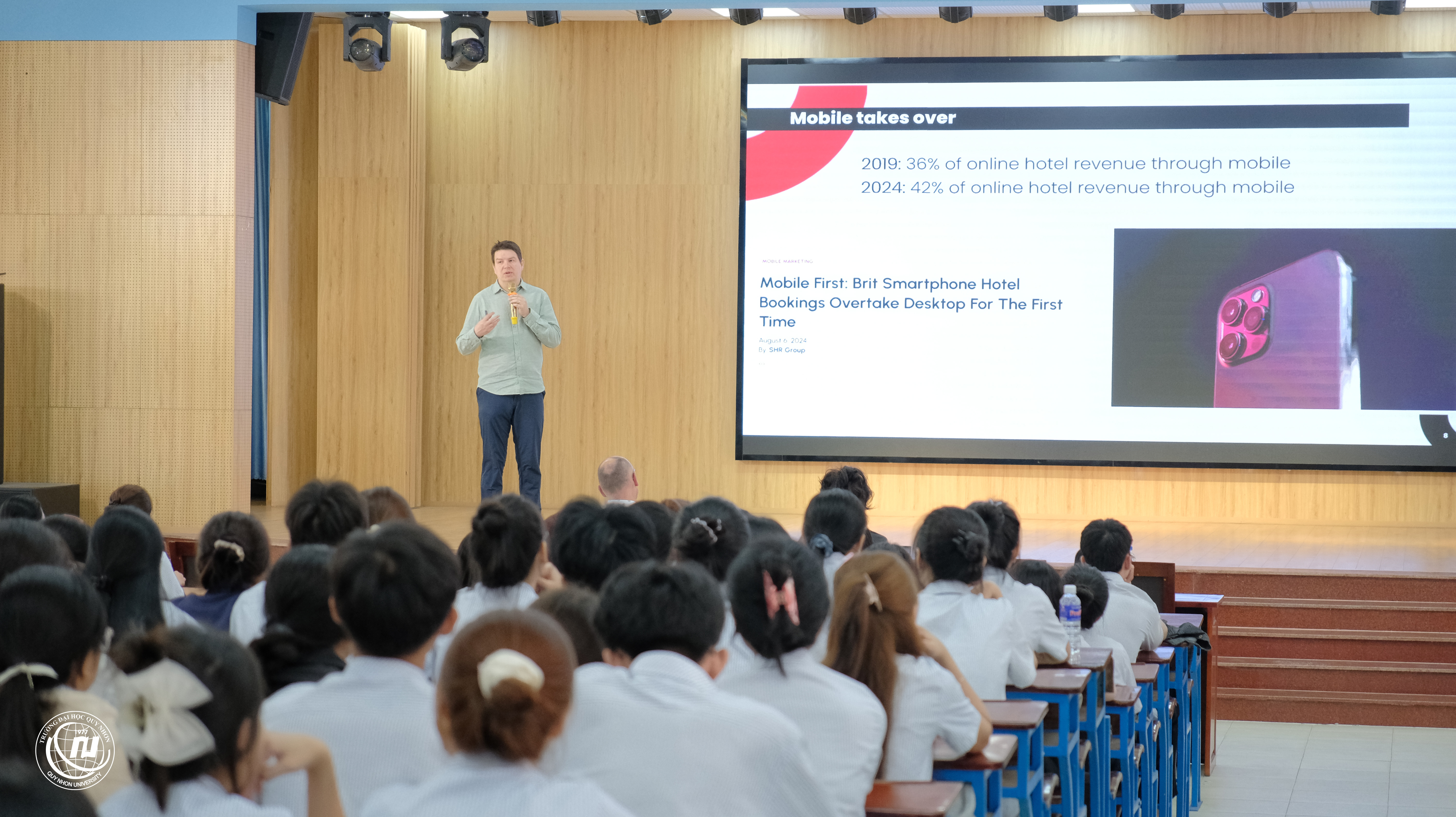
Students attended Dr. Lode Vanwildemeersch's cultural immersion lecture on "The Story of Belgian Chocolate and Beer" from VIVES University of Applied Sciences.
The lectures were thoughtfully designed to be both contemporary and globally relevant, covering topics such as multiculturalism in international environments; digital transformation trends and sustainable development in the hospitality and tourism sector; and a cultural immersion session entitled "The Story of Belgian Chocolate and Beer."
.jpg)
Dr. Matthieu Calu from VIVES University of Applied Sciences delivered his lecture on "Digital Trends and Sustainability in the Hospitality and Tourism Sector."
Beyond acquiring new knowledge, students were also introduced to Belgium as a country, the academic environment at VIVES University, and the scholarship opportunities available through the ICP Connect Project. These experiences provide an essential foundation for developing students' intercultural competencies, broadening their global perspective, and preparing them to enter the international labour market with confidence.
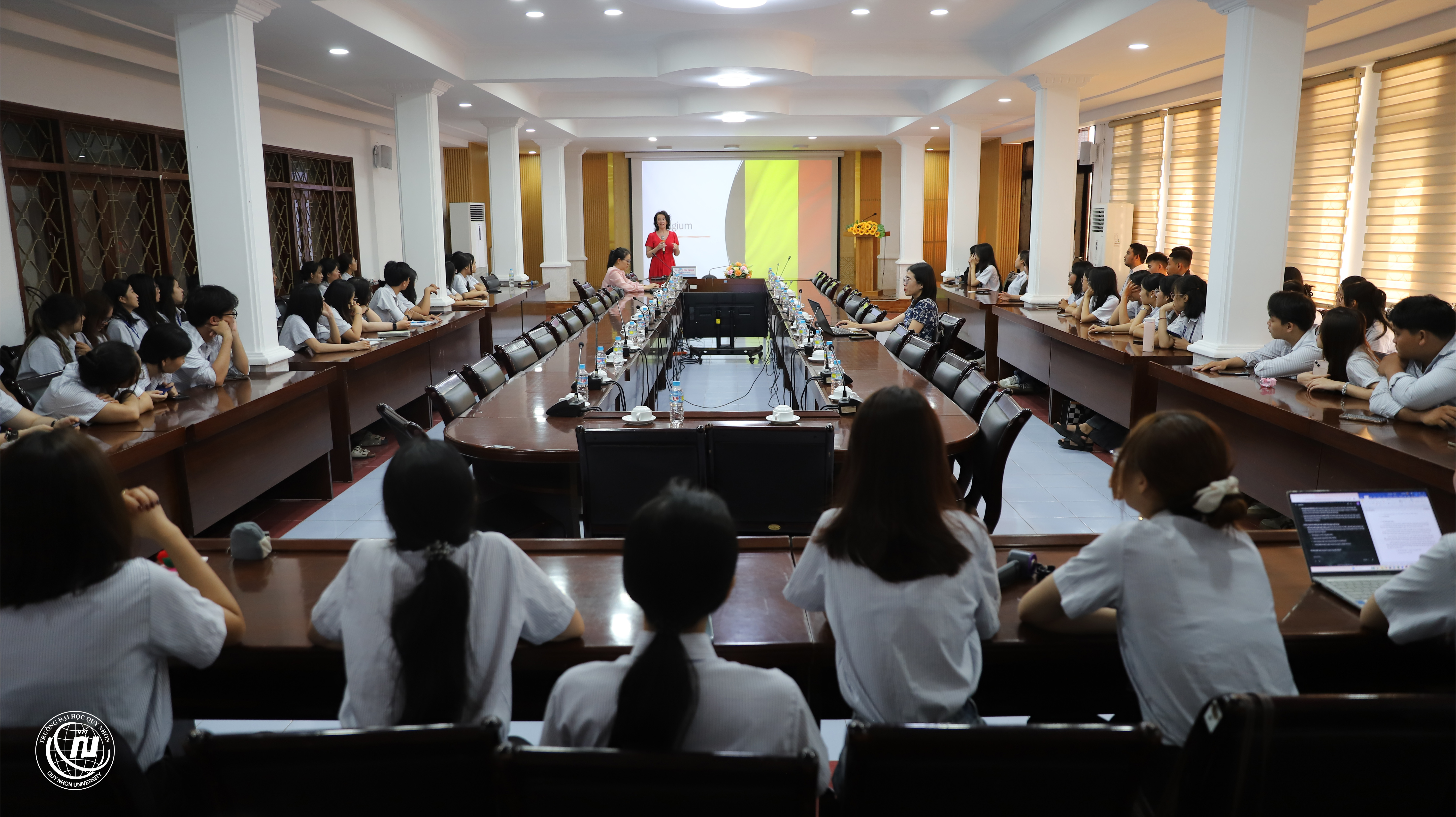
Ms. Anneleen Denys, ICP Project Coordinator, presented an overview of Belgium, VIVES University of Applied Sciences, and scholarship opportunities available under the ICP Connect Project.
Alongside the academic programme, the delegation visited QNU's facilities and the university's dedicated Restaurant and Hotel practical training centre, engaging in an exchange of experiences on education that is closely integrated with professional practice.
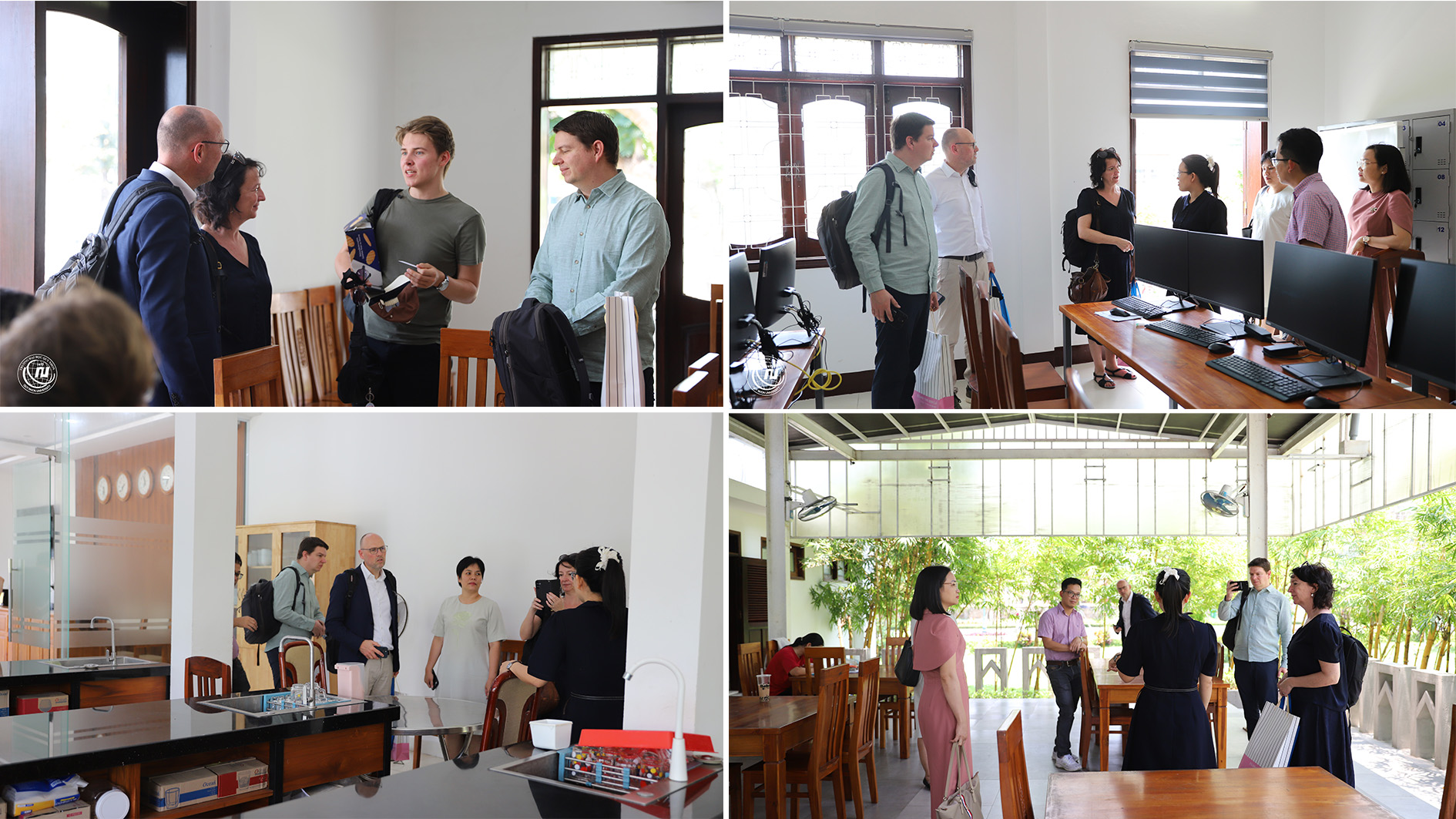
The delegation toured QNU's facilities and the university's Restaurant and Hotel practical training centre.
The working week concluded with a wrap-up session reviewing the programme's outcomes and aligning on the next steps for cooperation between the two institutions. This series of activities once again affirmed QNU's capacity for international engagement, its spirit of innovation, and its forward-looking vision in the broader journey toward global higher education integration. Through the ICP Connect Project, the university is steadily cultivating a dynamic, modern, and practice-oriented academic environment — one that opens ever-wider doors of learning and research for its faculty and students in the years to come.
Nguyen Van Thang
Vo Thien An