IUC - SP7 - On March 12, Quy Nhon University launched a waste sorting bin system across multiple areas of its campus to encourage source-separated waste disposal and gradually establish an effective waste management model within a university setting. The initiative was carried out based on discussions and proposed solutions regarding waste sorting and treatment under Project No. 7 — "Building a Sustainable Waste Management System at Quy Nhon University" — part of the IUC-QNU Programme, contributing to greater environmental awareness and advancing the university's vision of a green, sustainable learning environment.
The waste sorting bins have been deployed across key campus areas with high student footfall, particularly lecture halls, the library, and student dormitories. Specifically, bins have been placed in lecture buildings A1, A2, A3, A5, A6, and A7, the library, the four-story building, the fifteen-story building, and student dormitory blocks C1, C2, and C4. The bins are made of stainless steel with multiple compartments, fitted with either open or closed lids depending on their location, to make on-site waste sorting as convenient as possible. In addition, the university has installed dedicated collection bins for used batteries in selected areas to ensure the proper collection, storage, and disposal of hazardous waste in compliance with environmental regulations.
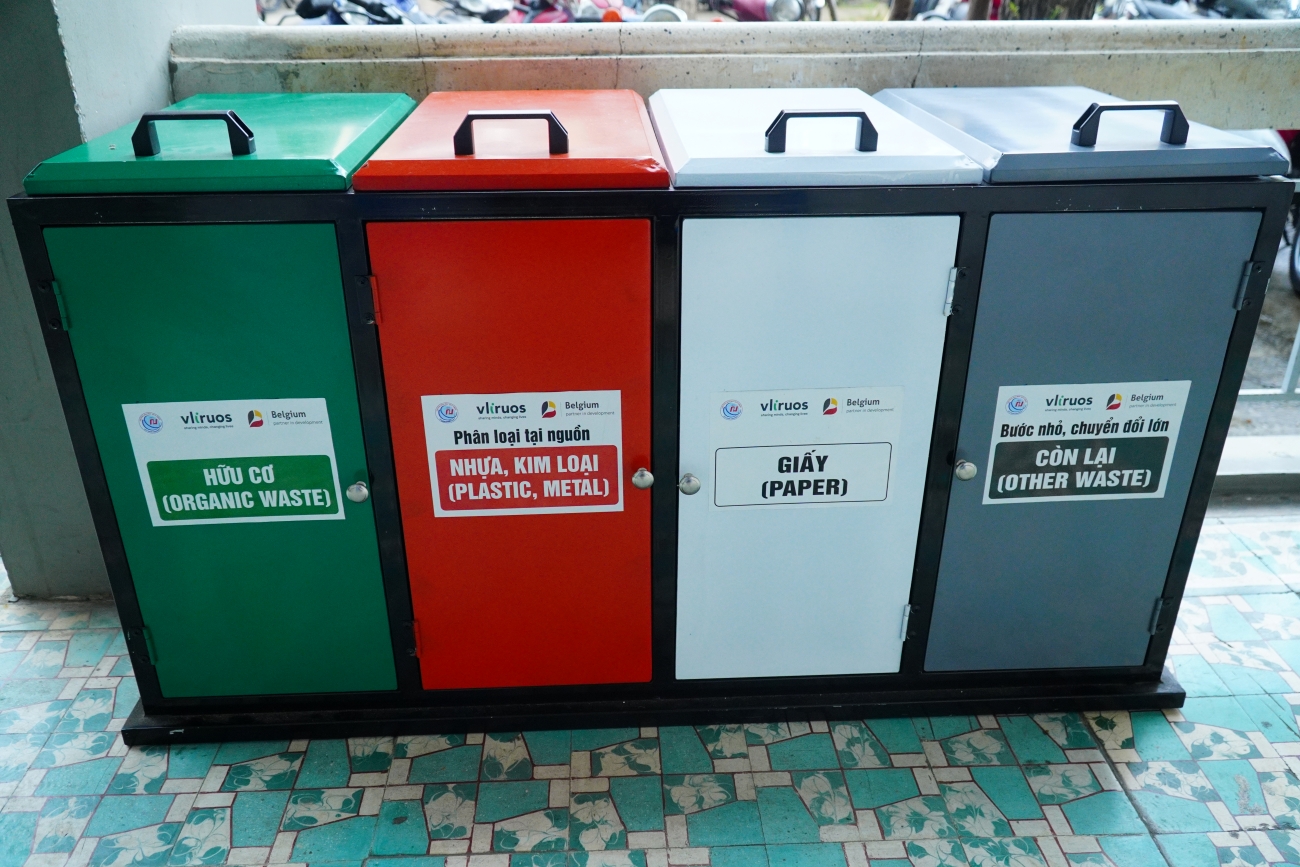
Waste sorting bins were installed across QNU's campus to facilitate source-separated disposal.
This rollout represents one of the concrete steps QNU is taking to implement practical waste management solutions on campus. Prior to this, under Project No. 7 of the IUC-QNU Programme, the university organized a seminar on waste sorting strategies, household waste reduction, and organic waste treatment, drawing participation from scientists, lecturers, postgraduate students, and undergraduates with an interest in environmental issues. The discussions yielded a number of solutions well-suited to the university's actual conditions, with particular emphasis on promoting source separation as a critical step toward more effective waste management and an improved campus environment.
.png)
Installation and placement of sorting bins in various campus zones.
Under Vietnam's Law on Environmental Protection (2020) and QNU's own waste management regulations, solid household waste must be sorted at the point of generation to improve the efficiency of collection, recycling, and treatment. Waste sorting not only reduces the volume of waste sent to landfill but also enables the recovery of reusable and recyclable resources, thereby minimizing negative environmental impacts. In a university context, this initiative carries additional significance — it helps cultivate green living habits and strengthens students' awareness of and responsibility toward environmental protection.
%20(1).jpg) Experts presented at the waste sorting and organic waste treatment seminar held under Project No. 7 of the IUC-QNU Programme.
Experts presented at the waste sorting and organic waste treatment seminar held under Project No. 7 of the IUC-QNU Programme.
Through the implementation of this waste sorting system, Quy Nhon University aims to gradually build a culture of responsible waste disposal within the campus community and inspire broader action toward an environmentally friendly lifestyle. Going forward, the university will continue to intensify awareness campaigns, provide guidance on proper waste sorting practices, and explore waste treatment solutions suited to its specific operational context — all in service of building a cleaner, greener, and more sustainable learning environment.
Nguyen Quy
Vo Thien An
.