DLR - On May 28, 2026, Quy Nhon University hosted the conference entitled “Developing Digital Libraries and Open Educational Resources” at Hall C. The event brought together experts, administrators, library professionals, lecturers, students, and representatives from educational institutions and technology enterprises in Vietnam and abroad. As one of the key activities of Project 6 in the fourth year of the IUC–QNU Programme, the conference also served as an academic and professional networking forum for sharing practical experience, strengthening collaboration among stakeholders, and advancing the digital learning-resource ecosystem amid the rapid digital transformation of higher education.
.jpg)
Dr. Ha Thanh Hai, Vice Rector of Quy Nhon University, emphasized the growing importance of digital libraries and open educational resources in enhancing education, scientific research, and lifelong learning.
The conference was attended by representatives of Quy Nhon University’s Board of Rectors; leaders of faculties, offices, institutes, and centres; representatives of the Gia Lai Provincial Library, the FPT University Quy Nhon Library, and Quang Trung University; as well as numerous experts and enterprises working in library and information services and educational technology. Notably, the event welcomed experts from Belgium, including Dr. Pieter Lernout, Director of Hasselt University Library; Prof. Marc Goovaerts of Hasselt University; and Prof. Martin Vackle of Ghent University. Their participation offered an international perspective on emerging trends in modern digital-library models and open educational resources in higher education.
In his opening remarks, Dr. Ha Thanh Hai, Vice Rector of Quy Nhon University, emphasized the increasingly important role of digital libraries and open educational resources in improving the quality of education and scientific research, while promoting lifelong learning. As digital transformation becomes an essential imperative for higher education, building a rich, modern, interoperable, and widely shareable digital learning-resource ecosystem not only transforms access to knowledge but also creates fresh momentum for innovation in teaching and learning.
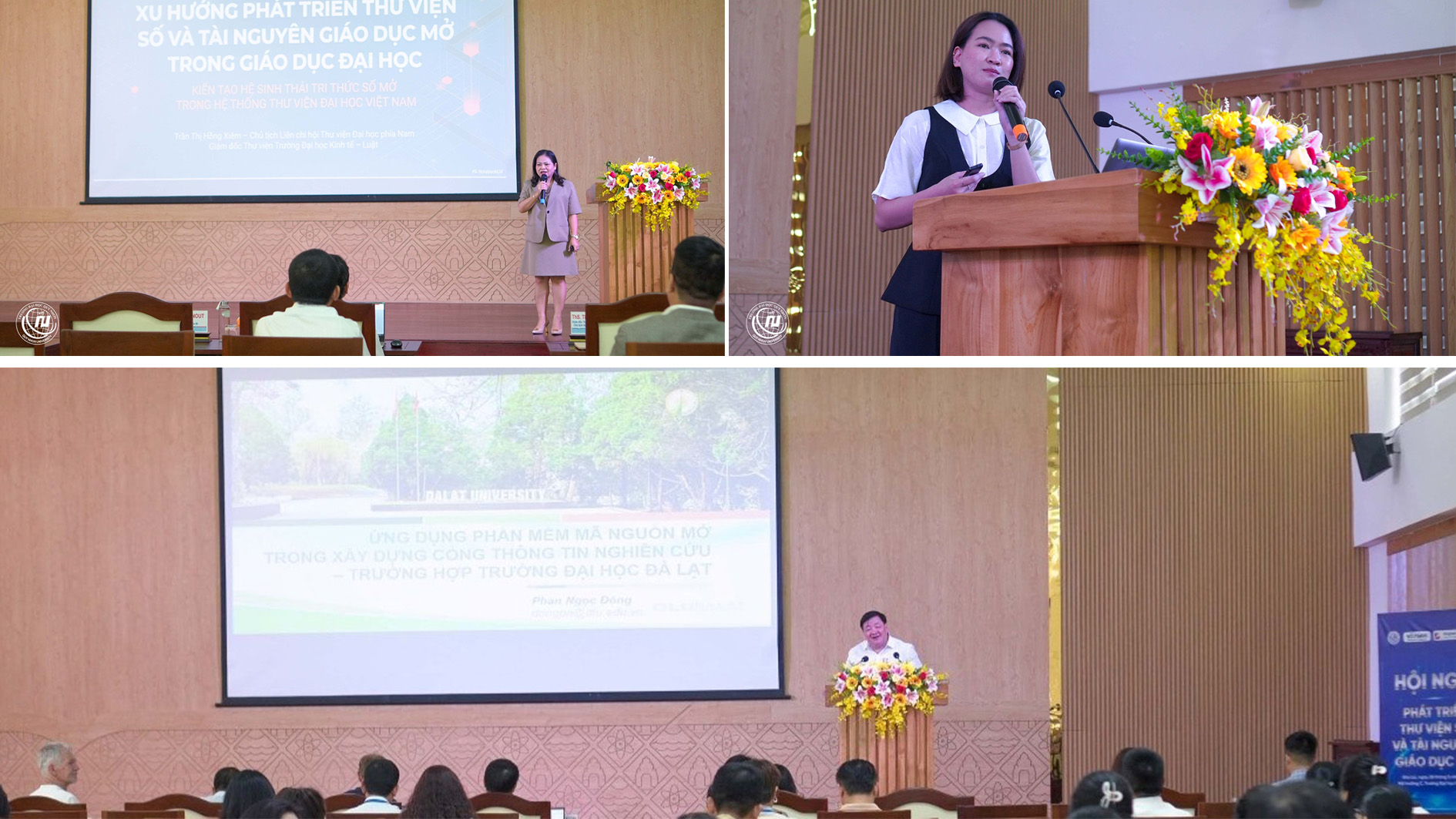
The experts offered diverse perspectives and introduced effective models from Vietnam and abroad, fostering knowledge connectivity and the sharing of practical experience in digital libraries and learning resources.
Through the conference, Quy Nhon University continued to affirm its proactive role in advancing the digital transformation of higher education. The event also strengthened connections among educational institutions, experts, and businesses to exchange digital-library models, technological solutions, and practical experience in developing, managing, and utilizing digital information resources. It further created opportunities to expand domestic and international cooperation toward a modern, interconnected, and sustainable digital education environment.
During the conference, experts, administrators, and business representatives discussed a range of practical issues, including digital-library development trends, the creation of integrated information portals, the application of artificial intelligence in managing and utilizing information resources, and the development of open educational resources in higher education institutions. The presentations offered diverse perspectives and introduced effective models from Vietnam and around the world, contributing to stronger knowledge connectivity and the sharing of practical experience in digital libraries and learning resources.
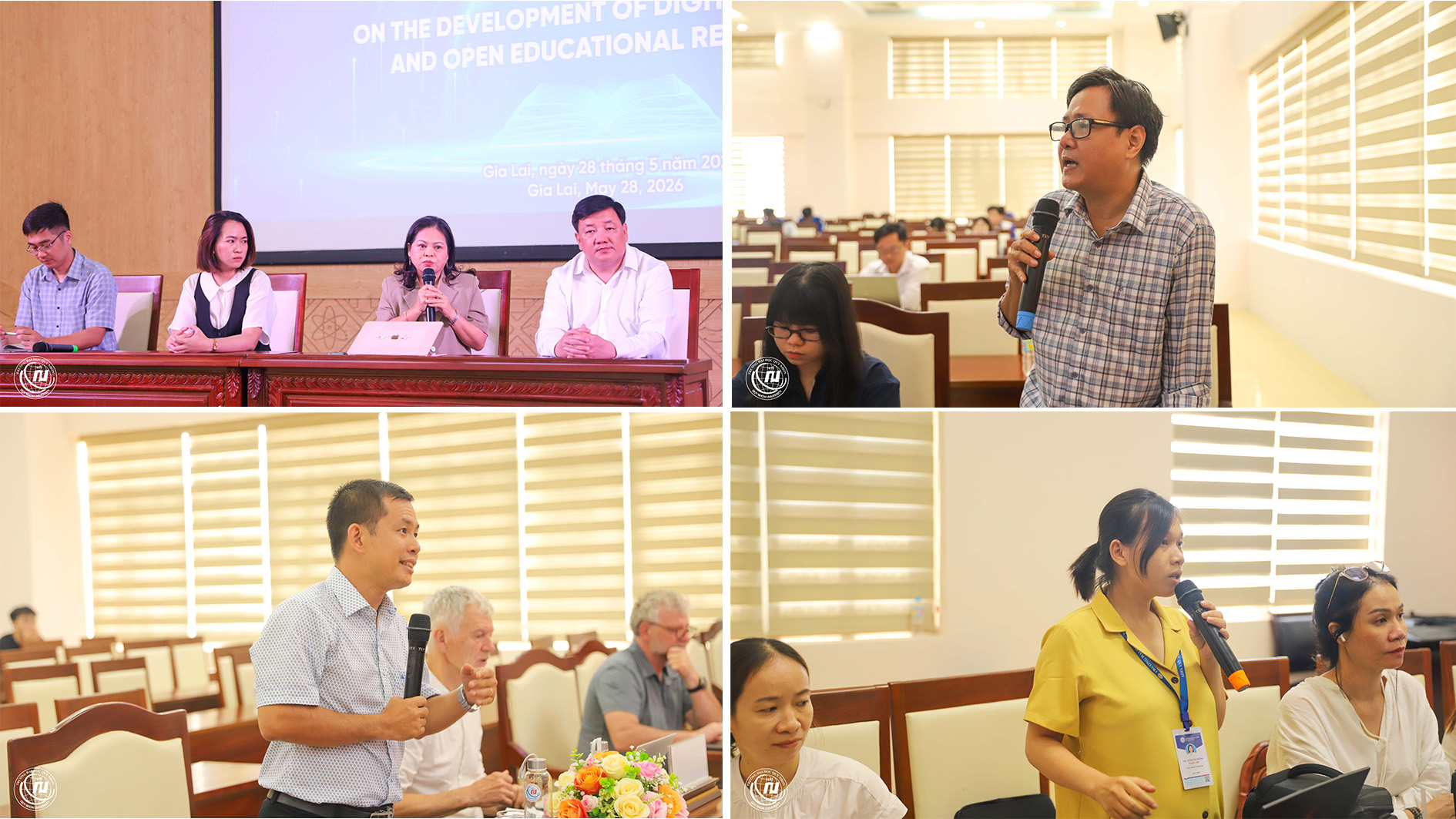
Delegates engaged in discussion and exchange.
The technological solutions and modern library models introduced at the conference highlighted a strong shift from traditional libraries toward learner-centred smart digital libraries. Discussions on the use of AI for data management, personalized user experiences, integrated digital portals and resources, storage infrastructure, and resource digitization opened up promising avenues for cooperation between universities and businesses in developing digital learning materials and improving information governance.
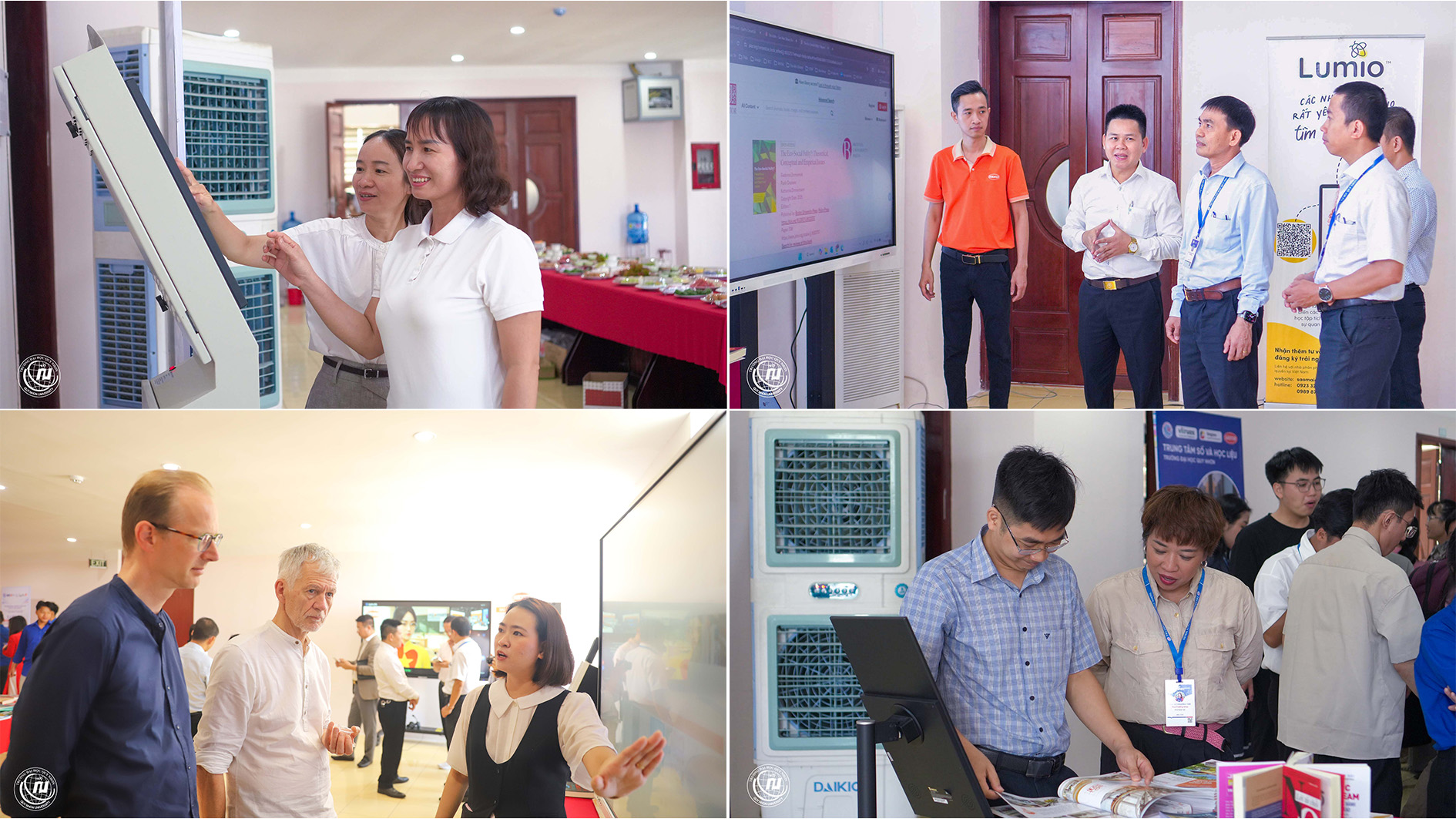
Delegates experienced digital technologies showcased at the conference.
Beyond a venue for professional exchange, the conference provided an open academic forum in which delegates discussed key challenges arising from digital transformation, including the standardization of digital data, shared resources among universities, the cultivation of an open educational-resource culture, digital copyright protection, and the enhancement of digital capabilities among library professionals in the new era.
Through the conference’s series of networking and knowledge-sharing activities, Quy Nhon University reaffirmed its commitment to developing a modern, interconnected, and sustainable ecosystem of digital libraries and open educational resources. At the same time, the university continues to promote cooperation among QNU, educational institutions, international organizations, and technology enterprises, contributing to enhanced educational quality, scientific research, and the development of digital learning environments in an era of comprehensive digital transformation.
Minh Hien
Vo Thien An