DLR - Under the framework of the EU-funded ECO-WIND Project, Quy Nhon University hosted a specialized training course on "Fault Diagnosis Skills in Wind Power Plants" from June 6 to 7, 2026. The programme brought together international experts, scientists, lecturers, managers, and engineers from universities, research institutes, and enterprises operating in the wind energy sector across Vietnam. Far more than an academic forum, the course served as a platform for knowledge exchange, experience sharing, and stronger collaboration between educational institutions, research bodies, and industry — while also updating participants on the latest advances in the operation, monitoring, and maintenance of wind power systems, with the ultimate goal of developing a high-quality workforce to drive Vietnam's green energy transition and sustainable development.
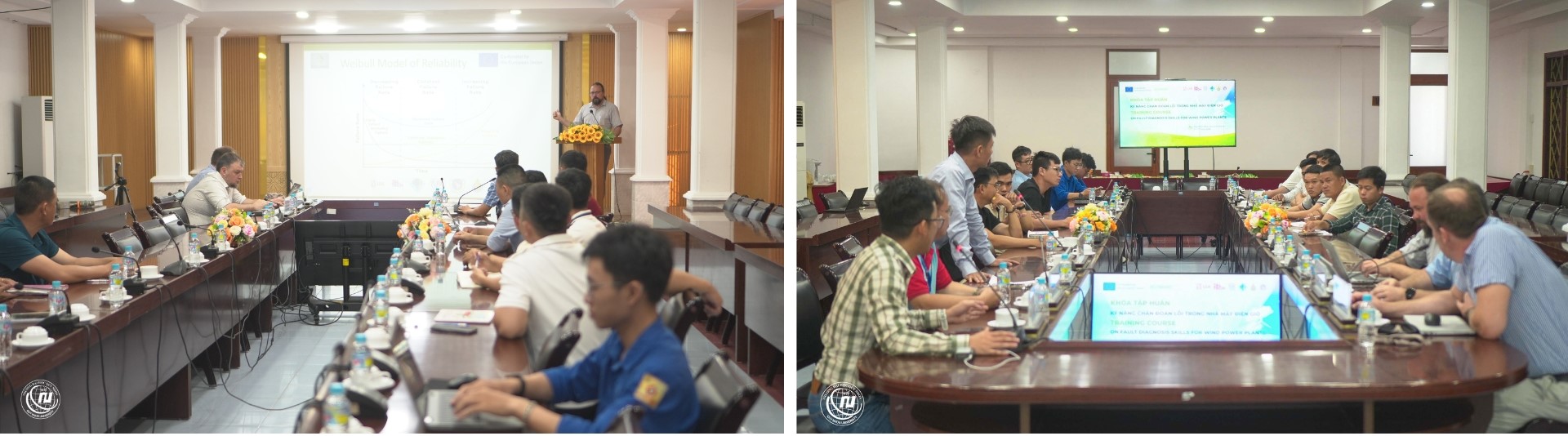
An overview of the training course.
As the global energy transition accelerates, renewable energy — and wind power in particular — is playing an increasingly vital role in the socio-economic development strategies of nations around the world. To ensure that wind power systems operate safely, efficiently, and sustainably, the enhancement of monitoring, fault diagnosis, and equipment maintenance capabilities has become an urgent priority for engineers and specialists working in the sector.
It is precisely in response to this need that Quy Nhon University organized the training course under the "Enhancing Condition-Based Maintenance Capacity for Wind Energy" (ECO-WIND) Project. This is an EU-funded international cooperation initiative aimed at strengthening training, research, and technology transfer capabilities in wind energy for higher education institutions and relevant stakeholders. Through the project, participating organizations gain access to modern pedagogical approaches, cutting-edge technologies, and a robust international cooperation network in the field of renewable energy.
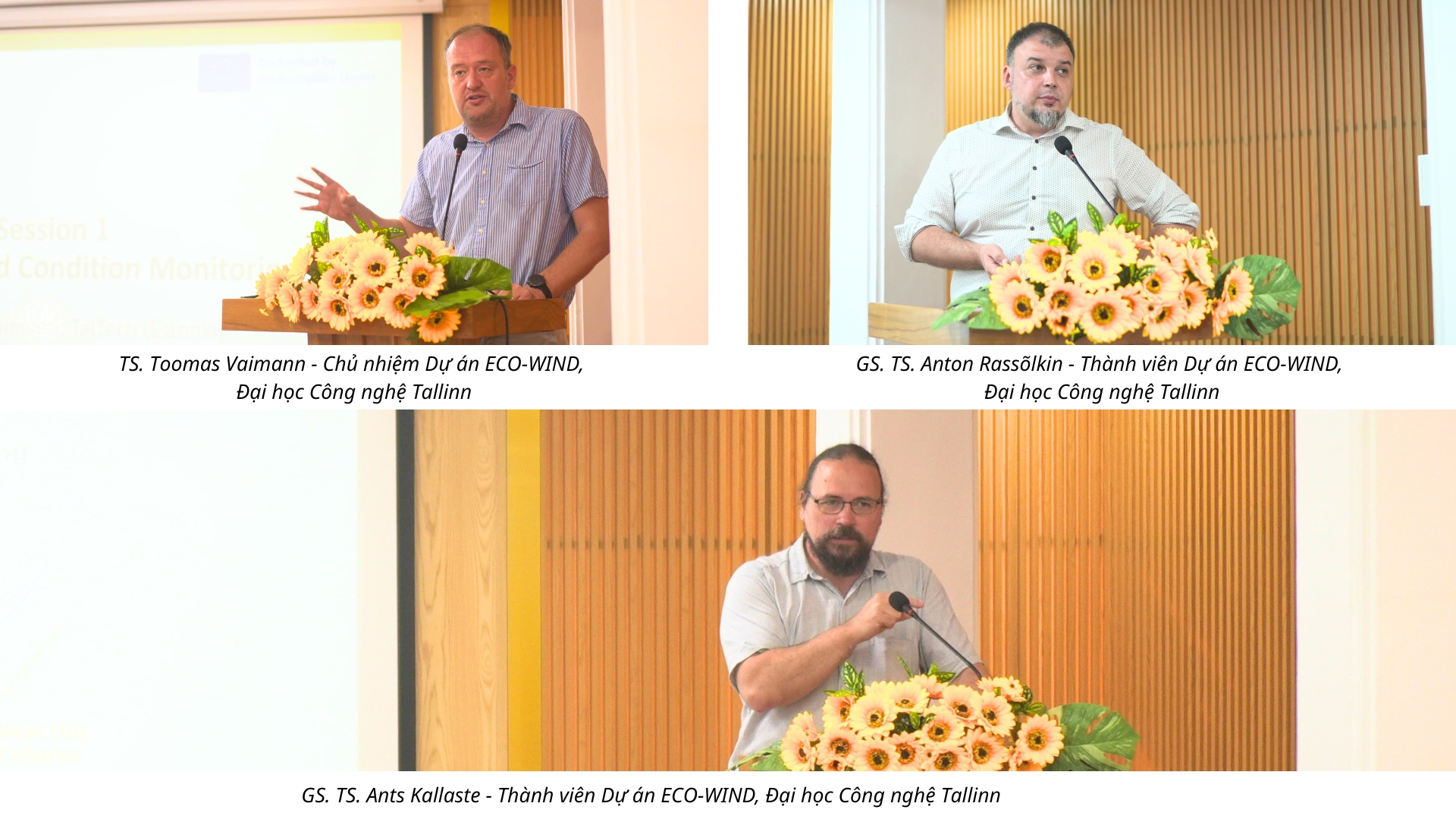
The course was delivered by a team of experts from Tallinn University of Technology (Estonia) — a partner institution in the ECO-WIND Project — including Dr. Toomas Vaimann, Prof. Dr. Anton Rassõlkin, and Prof. Dr. Ants Kallaste. The programme also drew a large number of scientists, lecturers, specialists, and engineers from universities, research institutes, and companies active in the wind energy sector across Vietnam.
Over the two working days, participants engaged with a wide range of specialized topics related to equipment condition monitoring and fault diagnosis in wind power plants. The experts shared in-depth knowledge and practical experience on modern diagnostic methods, monitoring systems in mechatronic assemblies, the identification and analysis of common failure modes in wind energy equipment, as well as decision-support tools for operational and maintenance processes.
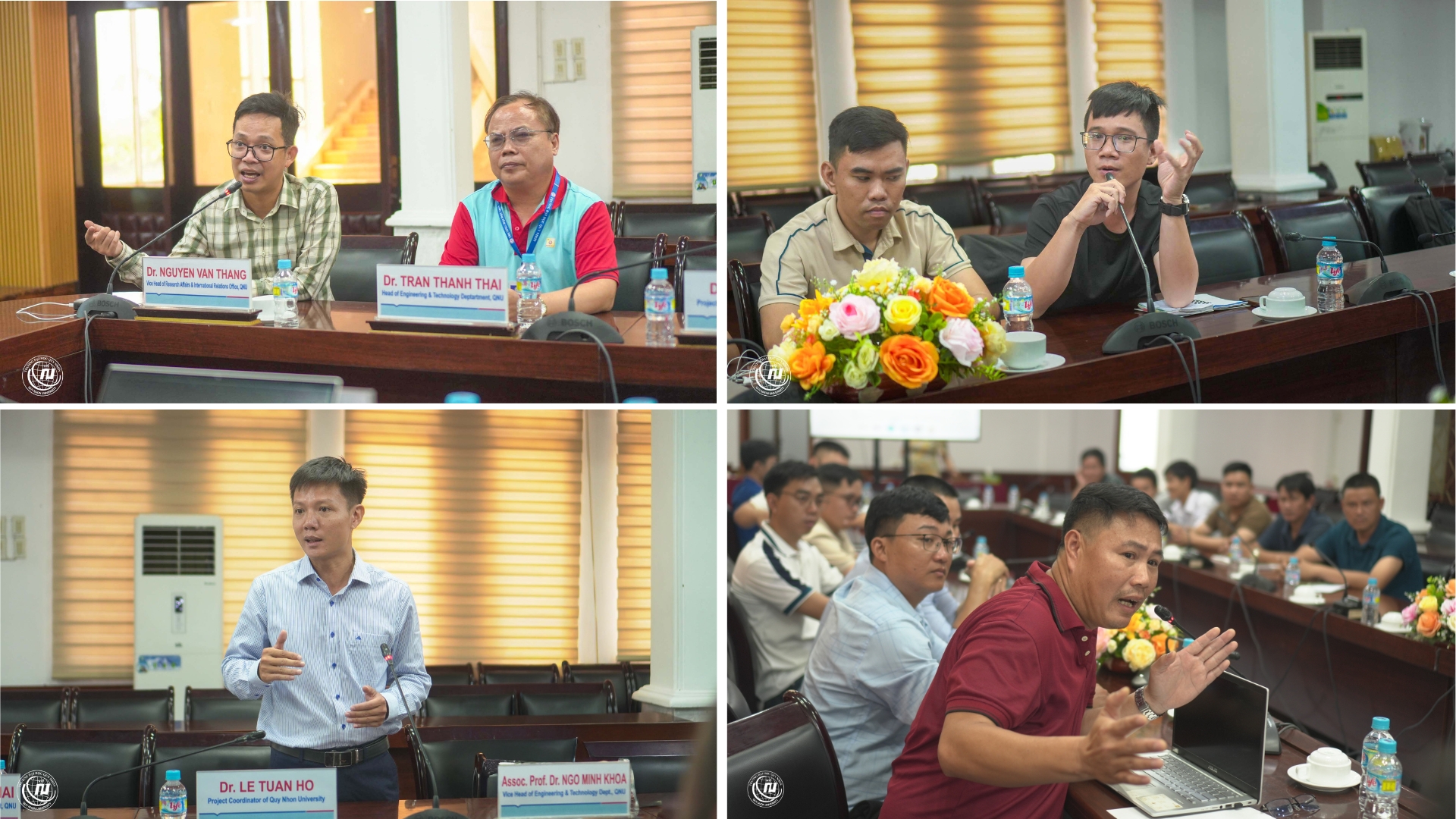
A discussion and exchange session between international experts, QNU lecturers, and course participants.
One of the standout highlights of the training course was the application of Digital Twin technology in equipment maintenance. This technology enables the simulation of a system's operational state within a digital environment, supporting early detection of anomalies, prediction of potential failures, and optimization of maintenance schedules. It represents one of the most significant technological trends currently being widely adopted across modern industrial and energy sectors.
Alongside the theoretical content, the programme placed strong emphasis on practical application through thematic discussion sessions, case studies, and the sharing of lessons learned from international projects. Participants had the opportunity to engage directly with the experts, jointly explore fault resolution strategies, and gain exposure to advanced maintenance models currently being implemented in many developed countries. This enabled them to sharpen their problem-solving capabilities, stay abreast of the latest technological trends, and expand their professional collaboration opportunities in the wind energy field.
The course also introduced the Condition-Based Maintenance (CBM) model — an approach that enhances operational efficiency, reduces maintenance costs, and extends the service life of wind power systems. This is a methodology that many countries are now prioritizing as a means of optimizing the performance and output of their renewable energy assets.
The successful organization of this training course further affirms Quy Nhon University's role in implementing international cooperation projects, advancing scientific research, fostering innovation, and developing a high-quality workforce. Through its partnerships with prestigious international institutions, the university continuously enhances its educational quality, broadens access to new knowledge and technologies, and contributes to meeting the human resource demands of high-tech industries and the green energy sector.
Beyond its academic significance, the training course also served to strengthen the connections between the university, the business community, and international organizations — laying the groundwork for future research collaboration and technology transfer activities. The event stands as a clear testament to Quy Nhon University's commitment to walking alongside the green energy transition, driving sustainable development, and deepening international integration.
Minh Hien
Vo Thien An