DLR - Digital transformation has become an inevitable trend in higher education. Embracing this shift, Quy Nhon University (QNU) has been steadily intensifying its adoption of modern technologies across teaching and scientific research activities. In line with its development strategy for 2025–2030, the university organized a scientific conference on January 31, 2026, under the theme "Applying Artificial Intelligence (AI) to Training and E-Learning." More than an academic forum for experts and lecturers to exchange insights and share experiences, the conference served as a clear demonstration of QNU's commitment to elevating educational quality and meeting the demands of reform in the digital age.
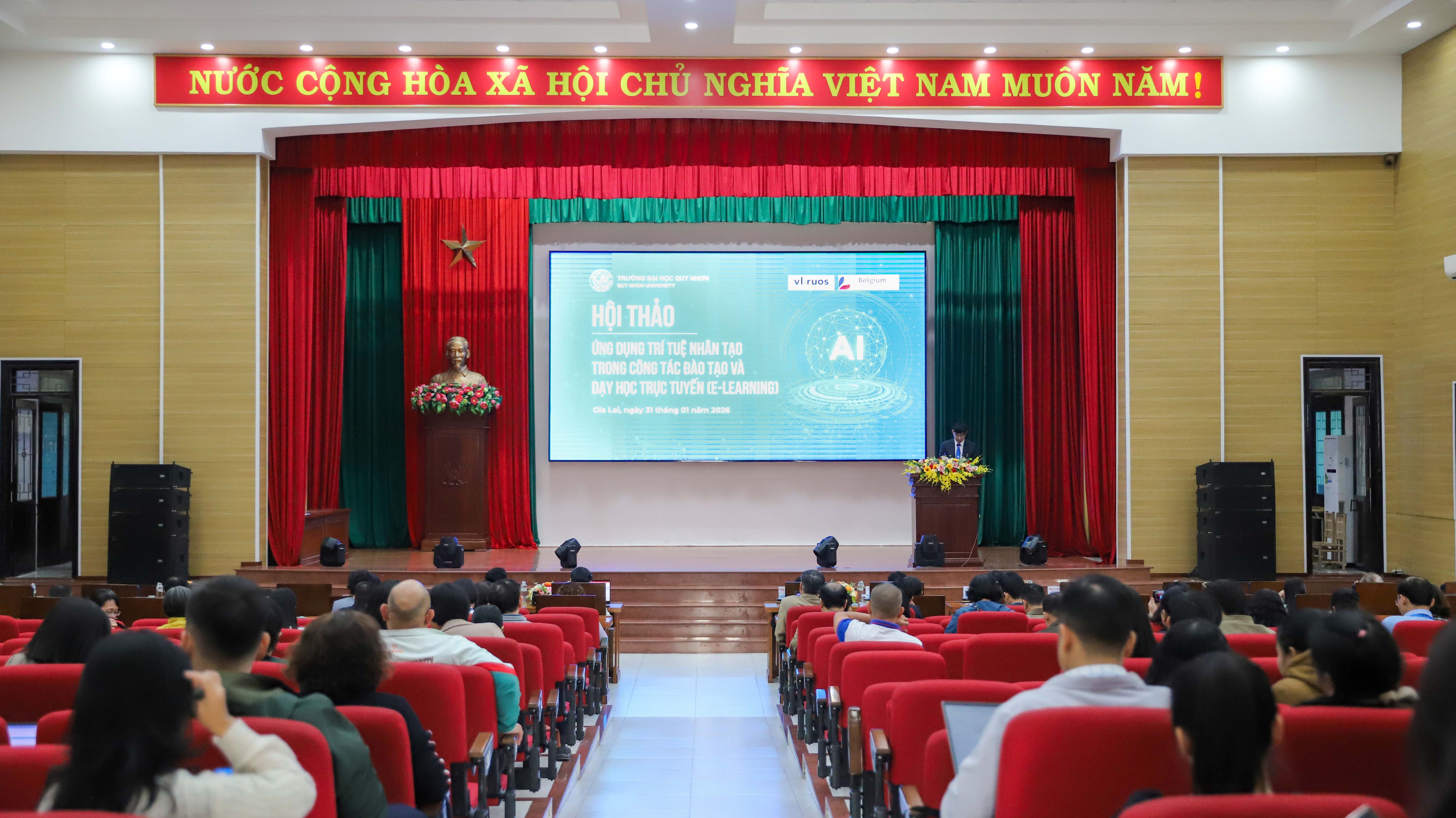
The conference was held within the framework of Project 6 of the IUC-QNU Programme.
The conference was held within the framework of Project 6 under the IUC-QNU Programme, with the aim of concretizing the university's strategic goal of strengthening its capacity in e-learning, digital library services, and student-oriented digital service development. It also served as a meaningful and practical initiative contributing to the effective implementation of QNU's Digital Transformation Plan for the 2025–2030 period.
At a time when digital technology is fundamentally reshaping higher education, the conference carried significance not only as a strategic implementation event but also as a vital academic forum where experts and lecturers could explore solutions to enhance educational quality. Supported by Project 6 of the IUC-QNU Programme, the event brought together a network of prestigious Belgian universities — including KU Leuven, Hasselt, Ghent, Antwerp, HOGent, and VIVES. This international partnership not only enriched the conference with global academic resources but also opened pathways for QNU to engage with the most advanced trends in educational technology today.
Quy Nhon University Sets Its Sights on Becoming a Smart University
Assoc. Prof. Dr. Doan Duc Tung, Rector of Quy Nhon University, stated that the university aims to evolve into a smart university within the next five years. This ambitious goal has been clearly articulated both in the university's development strategy and in the Resolution of the Party Congress for the 2025–2030 term.
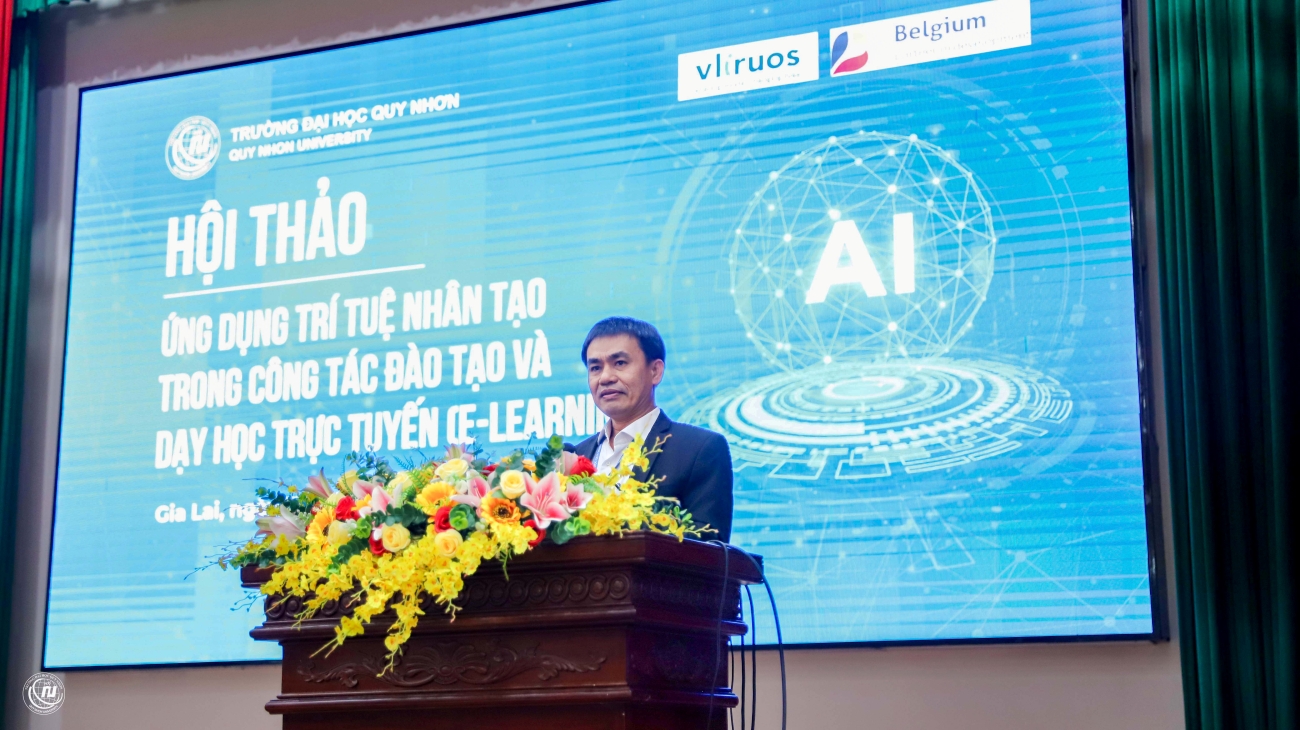
Assoc. Prof. Dr. Doan Duc Tung, Rector of QNU, stressed that AI adoption must go hand in hand with empowering the talents, intellect, and creativity of the university's academic staff.
In recent years, QNU has implemented a wide range of measures to bring these goals to fruition — from investing in physical infrastructure and technological systems to fostering research and teaching activities that leverage emerging technologies. Nevertheless, the Rector candidly acknowledged that while AI adoption at QNU has made inroads in certain areas, it has yet to be implemented in a systematic or cohesive manner. It is precisely for this reason that the conference holds such importance: it creates a forum for experts to share knowledge and experience, helping the university progressively refine its approach and move toward building a unified, effective AI integration model for both teaching and institutional management.
AI Adoption Must Go Hand in Hand with Empowering the Creativity and Intellect of Academic Staff
Speaking at the conference, Assoc. Prof. Dr. Doan Duc Tung emphasized that as Vietnam enters a new era of development, every sector — including higher education — is undergoing profound transformation. Both the university and the nation as a whole are working diligently to realize the strategic goals set forth by the Party. Across numerous high-level forums, Party and State leaders as well as provincial authorities have consistently stressed the need to innovate growth models, accelerate digital transformation, and develop infrastructure in pursuit of double-digit economic growth in the years ahead. To achieve these ambitions, science and technology, innovation, and digital transformation have been identified as the primary driving forces and the pivotal pillars of the country's development trajectory.
Building on this context, Assoc. Prof. Dr. Doan Duc Tung argued that in the face of mounting workloads and growing demands for efficiency, the adoption of artificial intelligence offers a highly valuable solution. AI can provide powerful support across management, teaching, and scientific research, boosting productivity and optimizing time management. However, the Rector was equally firm in asserting that artificial intelligence is, fundamentally, a supportive tool — one that cannot replace human thought, humanistic values, or the capacity for sound judgment. The integration of AI must therefore be pursued in thoughtful balance with the cultivation of the talents, intellect, and creativity of QNU's lecturers and students alike, as this harmony will form the bedrock of the university's sustainable development.
Integrating AI Across All University Operations
In the midst of a sweeping digital transformation, embedding artificial intelligence into university operations is not merely an inevitable trend for QNU — it is a deliberate and strategic step forward. AI unlocks new opportunities to modernize institutional management, enhance teaching quality, and accelerate scientific research, all while streamlining workflows, saving time, and improving the quality of decision-making. More significantly, AI serves as a catalyst that encourages every lecturer and student to take a proactive approach to knowledge acquisition, innovate their methods of learning and working, and collectively contribute to building an educational environment that is modern, creative, and agile enough to meet the evolving demands of the digital era.
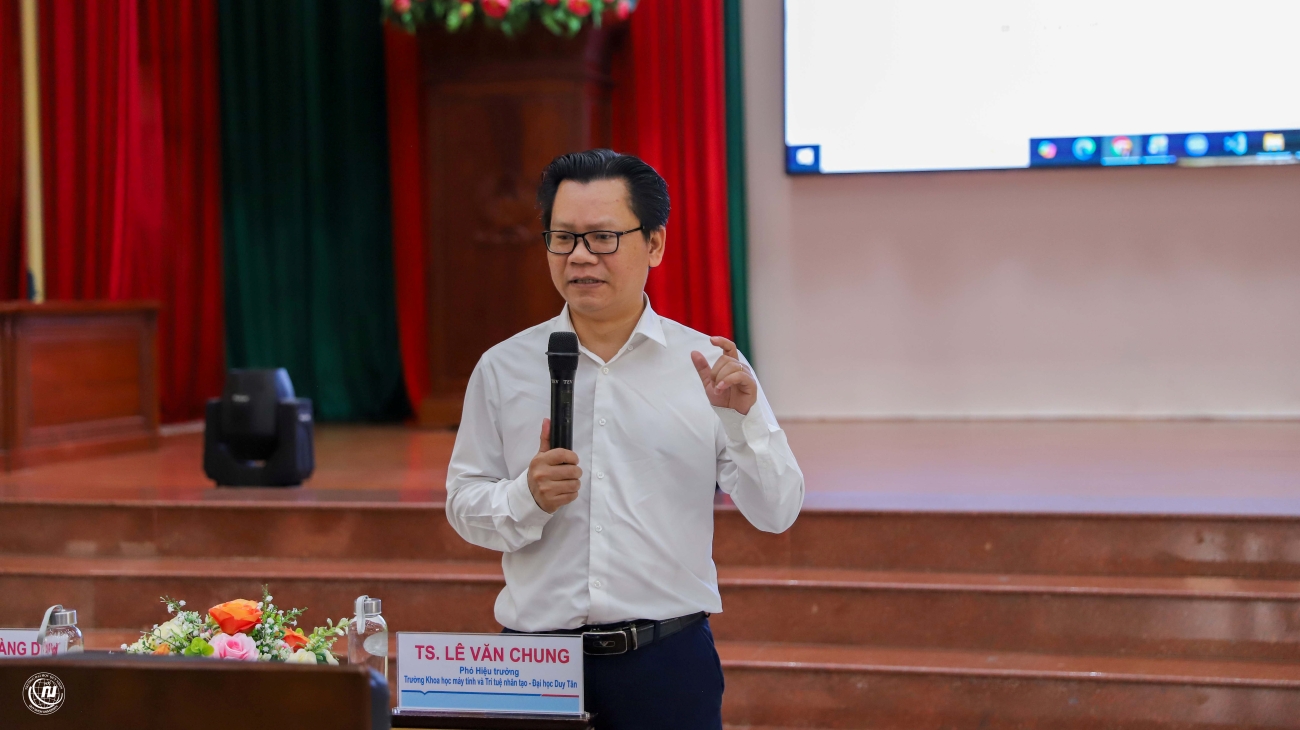
Dr. Le Van Chung, Vice Rector of the School of Computer Science and Artificial Intelligence at Duy Tan University, sharing his expertise with QNU's leadership and faculty.
At the conference, Dr. Le Van Chung — Vice Rector of the School of Computer Science and Artificial Intelligence — and Master's degree holder Doan Hoang Duy — Head of General Affairs at the same school and Deputy Head of the Faculty of Information Technology at Duy Tan University — delivered a series of in-depth and highly practical thematic presentations. Their papers addressed core issues including the design and deployment process for AI applications, the development of an AI ecosystem within education, and approaches to integrating technology into scientific research and academic management.
Notably, the presentations drew on a wealth of real-world experience in applying AI across disciplines including Business, Management, Engineering, and the Social Sciences and Humanities, opening up fresh perspectives on lesson design, pedagogical innovation, and learner assessment. The lively discussion sessions that followed — featuring direct exchanges between lecturers and specialists — proved equally valuable, helping to address practical challenges on the ground while proposing concrete directions and feasible roadmaps for the effective integration of AI into QNU's e-learning system.
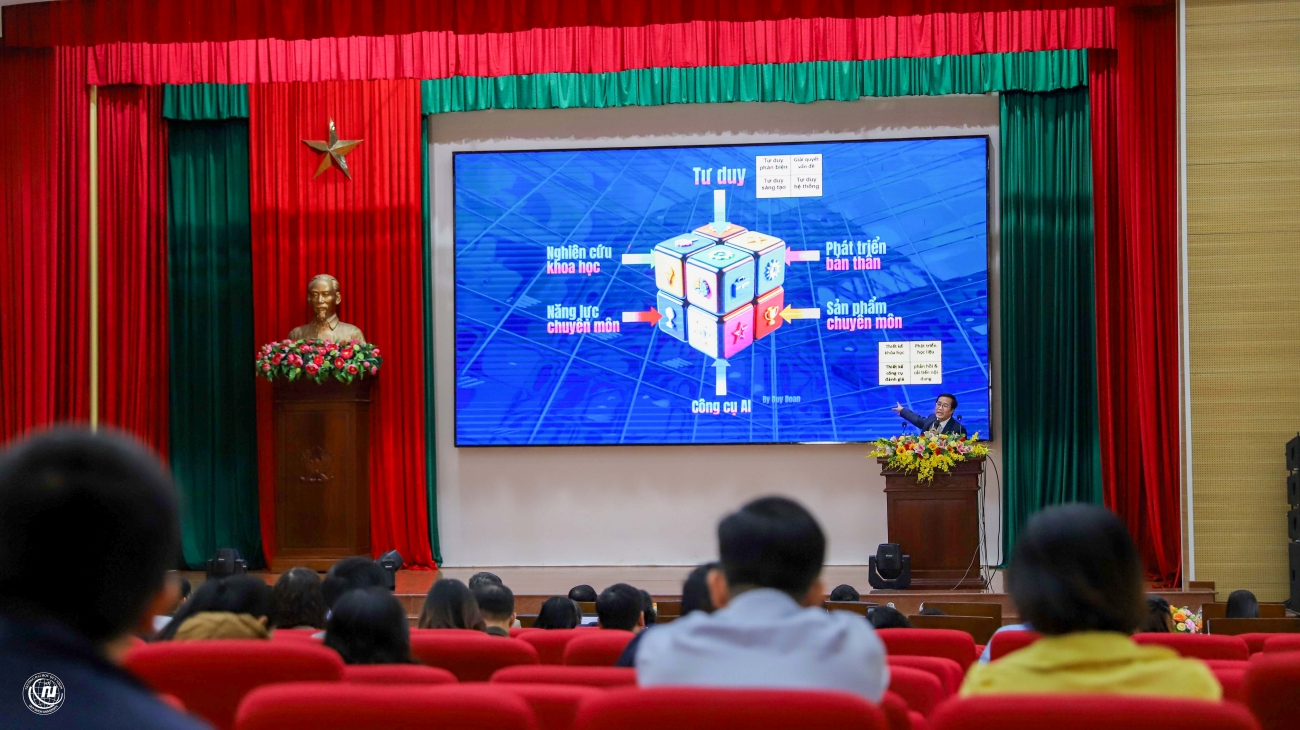
Master's holder Doan Hoang Duy, Head of General Affairs at the School of Computer Science and Artificial Intelligence and Deputy Head of the Faculty of Information Technology, Duy Tan University.
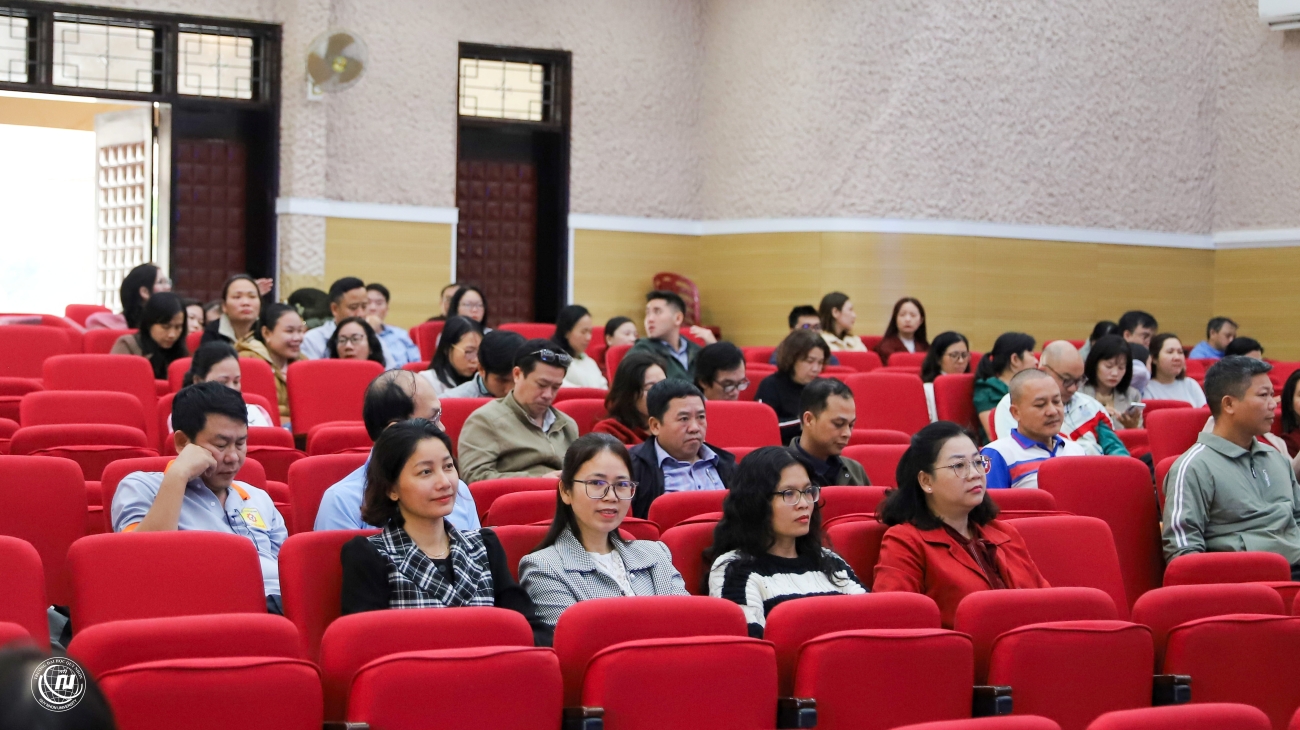
QNU lecturers in attendance at the conference.
The scientific conference on "Applying Artificial Intelligence (AI) to Training and E-Learning" did far more than deliver practical knowledge and hands-on experience in AI-enhanced teaching — it stood as a powerful affirmation of Quy Nhon University's institutional resolve and concrete action in the journey toward digital transformation. Drawing on the insights and dialogue generated throughout the event, the university is now oriented toward translating discussions into action: progressively rolling out AI in a coherent and effective manner across both teaching and management functions, thereby elevating the quality of higher education and rising to meet the challenges and opportunities of a new era.
Minh Hien
Vo Thien An